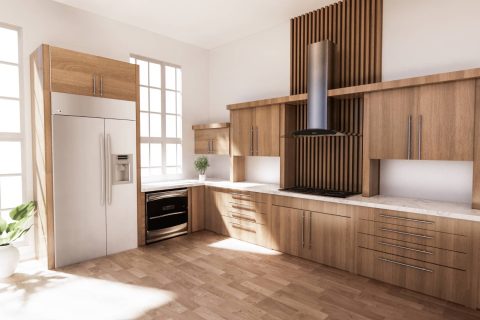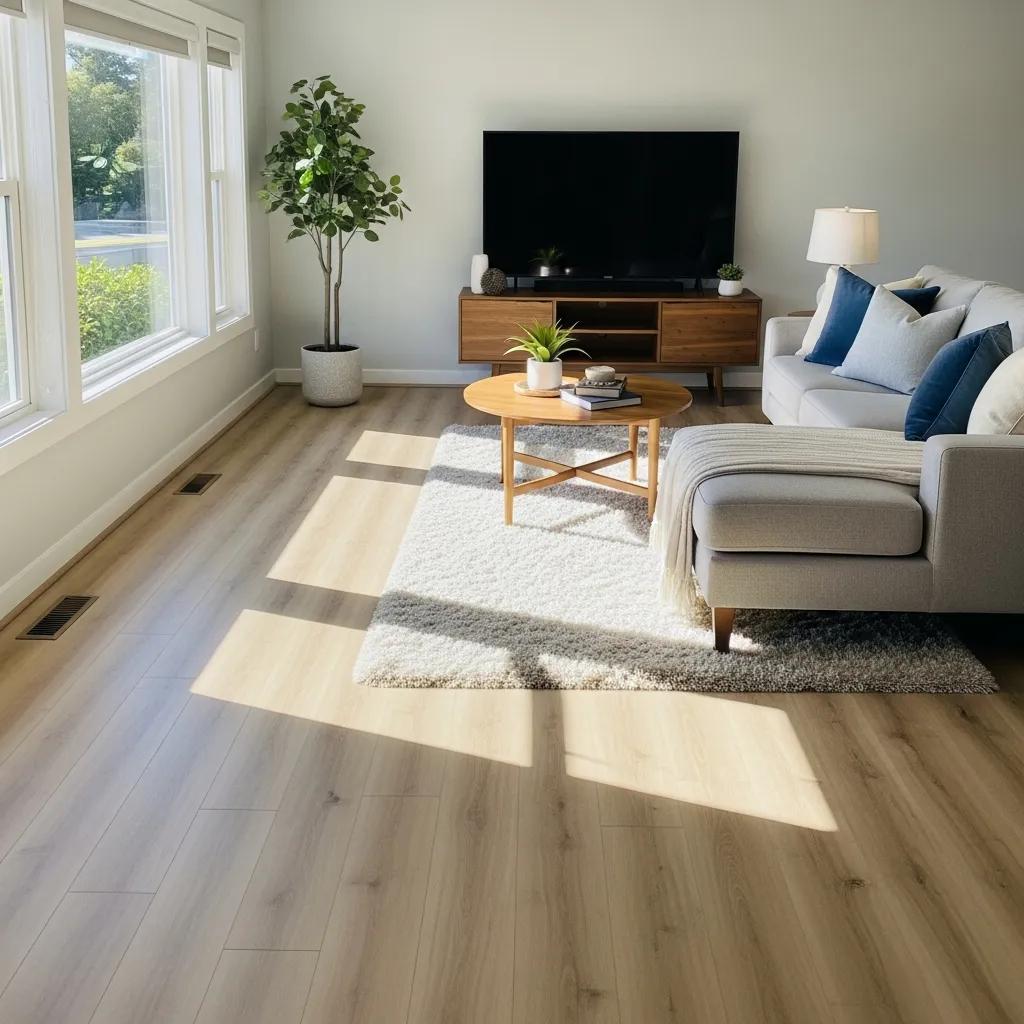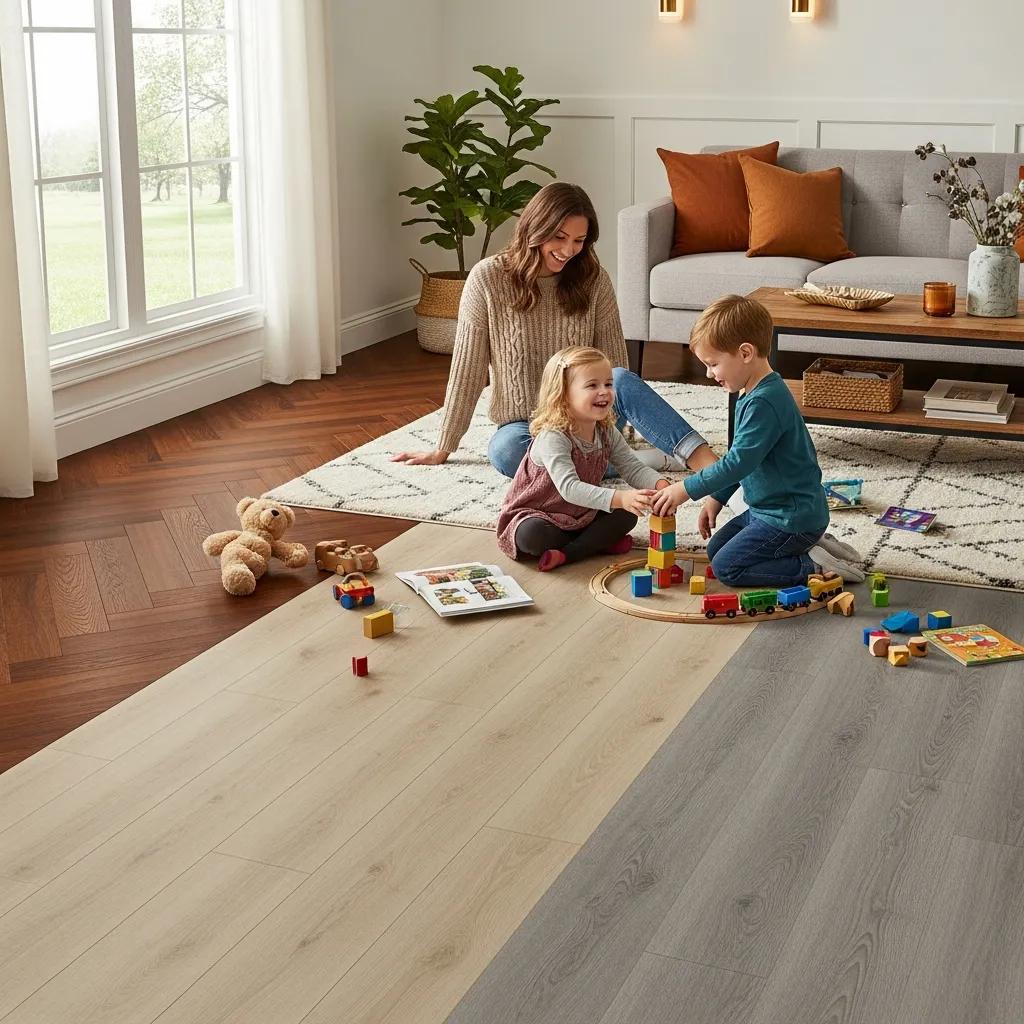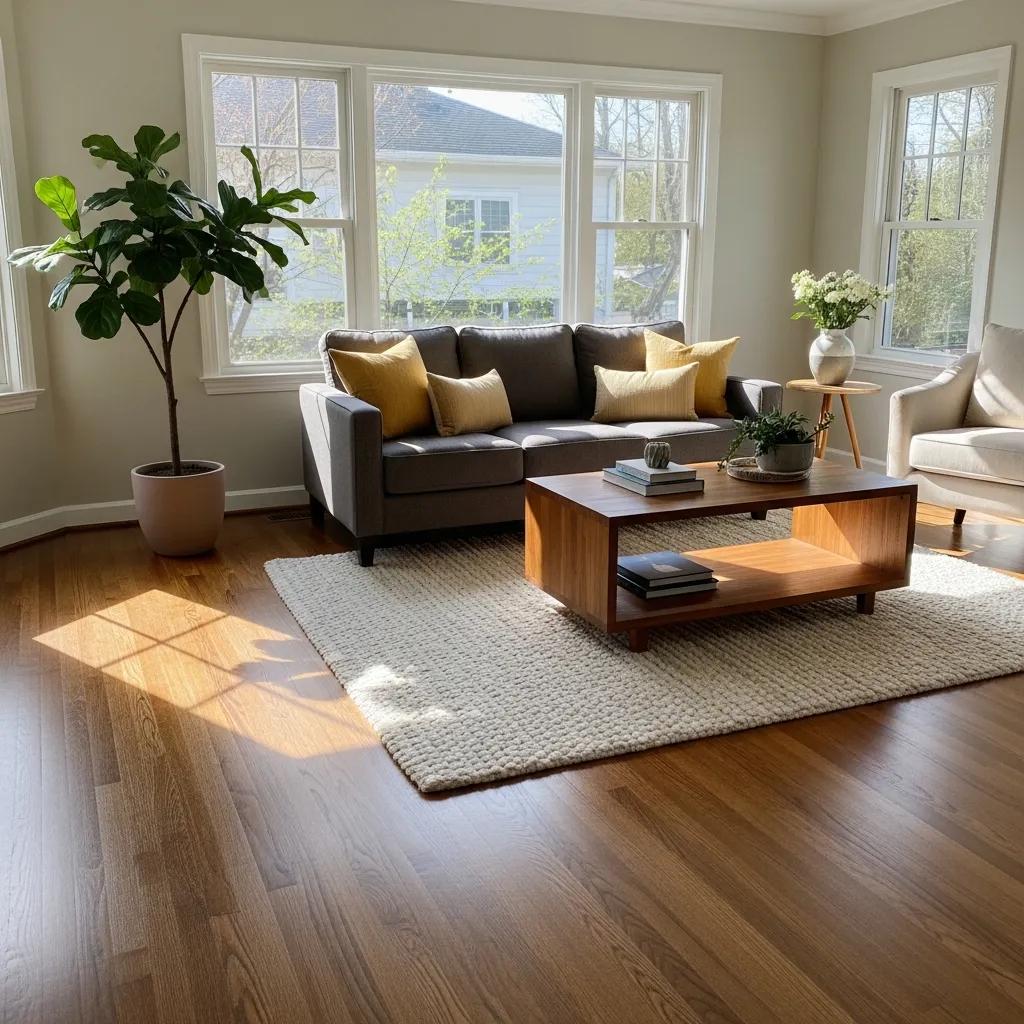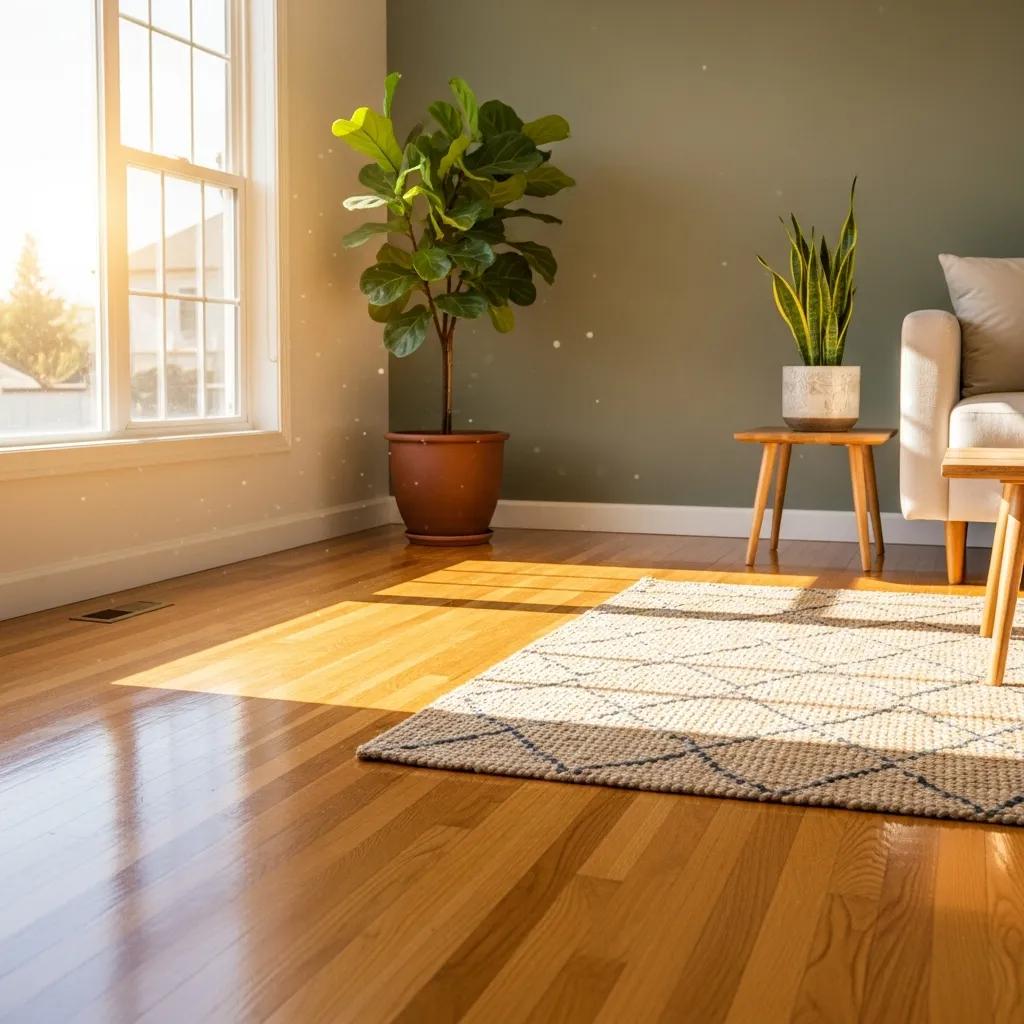
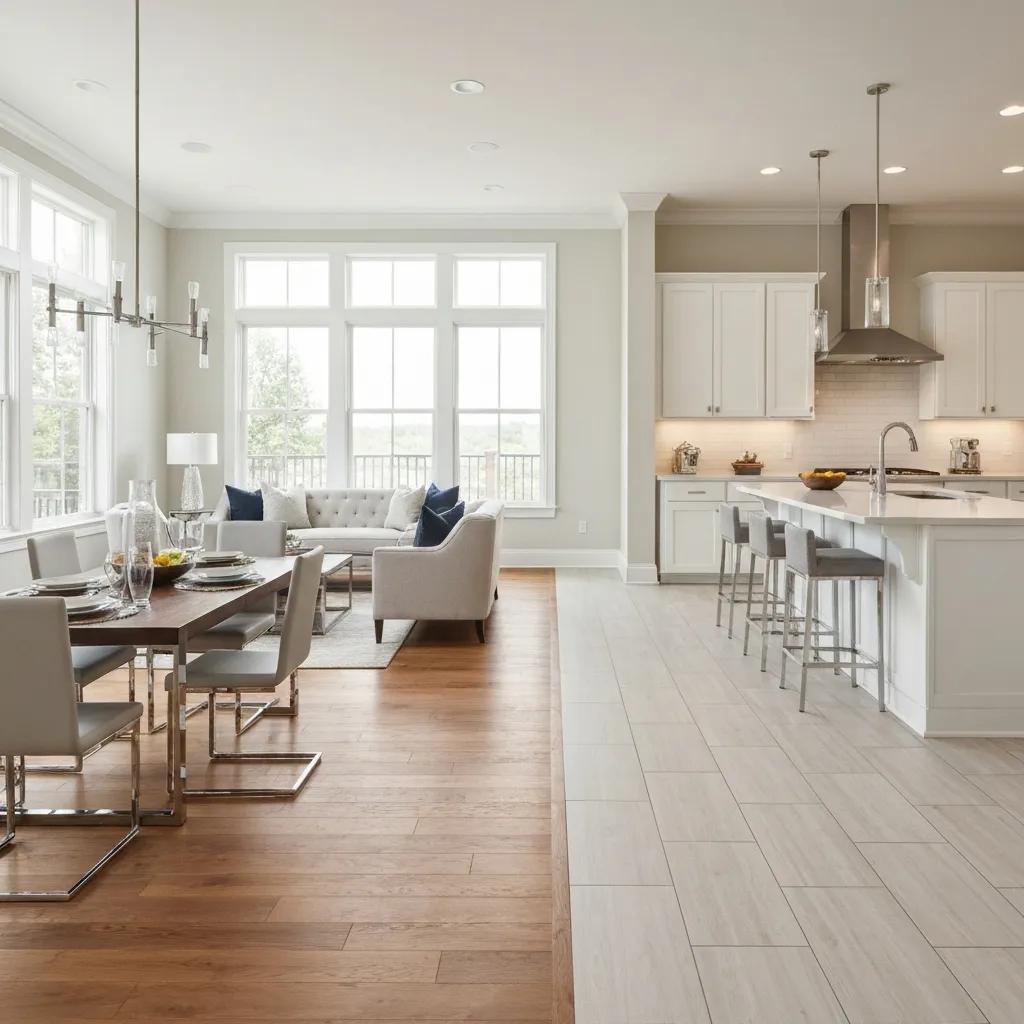
Choosing the right flooring for an open-concept home in Lithia Springs, GA, is a crucial decision that sets the visual tone, defines functional zones, and ensures durability across a large, connected living space. The ideal flooring material must balance aesthetics with practicality, offering a cohesive look while standing up to the diverse activities of daily life—from kitchen spills to living room foot traffic.
In this guide, we’ll explore the top flooring options for open-concept homes in Lithia Springs, GA, comparing materials like luxury vinyl plank, hardwood, and polished concrete, so you can select a surface that unifies your home in both style and resilience.
Discover the Best Flooring for Open-Concept Homes in Lithia Springs
What Are The Top Flooring Types For Open-Concept Homes In Lithia Springs?
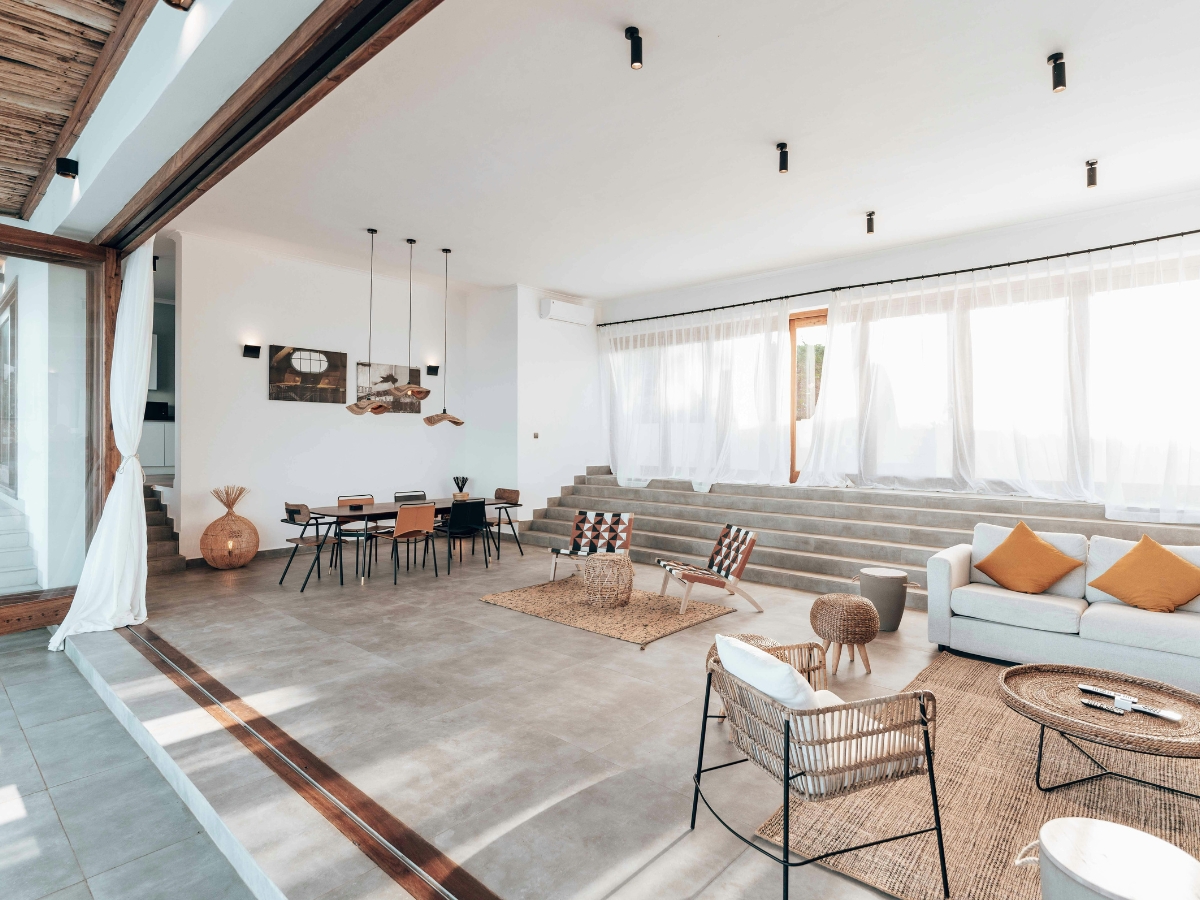
When you live in an open-plan layout, the flooring has to do more than look good in one room. It needs to visually connect the kitchen, living, and dining areas while standing up to different levels of foot traffic, spills, and sunlight. That is why the top flooring options for open-concept homes in Lithia Springs usually come from a short list: hardwood, luxury vinyl plank, laminate, and large-format porcelain tile. Each brings a slightly different balance of style, durability, and cost, which matters even more when one material runs across most of the main floor.
Hardwood remains the classic choice for open-concept spaces because it warms up large rooms and makes them feel cohesive. When the same species and stain stretch from the entry through the living area and into the dining space, everything reads as one continuous room rather than a series of separate zones. Site-finished hardwood can be refinished later if styles change or wear patterns develop, which is helpful in higher-traffic areas. The tradeoff is that hardwood needs protection from standing water and deep scratches, so active households often use rugs in play zones or near exterior doors.
Luxury vinyl plank has become a go-to option in Lithia Springs for busy homes that want a wood look without worrying about moisture. Quality LVP products are waterproof, resist scratches from pets and chairs, and come in realistic wood or stone visuals. In an open-concept plan, that means you can run one product through the kitchen, breakfast nook, and great-room area without worrying every time something spills. The softer feel underfoot and relative quiet compared with tile also help larger spaces feel more comfortable and less echo-prone.
Laminate flooring offers another wood-look solution at a budget-friendlier price. It handles everyday scuffs and scratches well, which makes it appealing in family spaces, but most traditional laminates are less tolerant of standing water. If you are considering laminate for an open layout where the kitchen shares the same floor, it is worth looking at newer water-resistant lines and paying close attention to manufacturer guidelines. With the right product and careful installation, laminate can still tie together a large space without stretching the budget as far as hardwood.
Large-format porcelain tile works best when your open-concept layout leans heavily on kitchen, dining, and mudroom zones or when you prefer a cooler, more contemporary look. Tile is extremely durable, highly water-resistant, and easy to clean, which makes it ideal for homes that see a lot of cooking, entertaining, or in-and-out traffic from the yard. Using larger tiles with minimal grout lines keeps the space from feeling choppy and helps big rooms look streamlined and intentional. The main considerations are comfort and acoustics, so area rugs often play an important role in softening seating areas.
Why Is Hardwood Flooring Ideal For Open-Concept Layouts?
Hardwood is one of the most popular choices among the top flooring options for open-concept homes in Lithia Springs because it connects large spaces in a way that feels warm and intentional. Instead of each room feeling separate, a continuous stretch of wood helps the kitchen, dining area, and living room read as one unified space. The eye naturally follows the grain and plank lines, which softens transitions and makes open layouts feel bigger and more organized. In homes that get a good amount of natural light, hardwood also reflects light in a soft, even way, which keeps wide rooms from feeling flat or dull.
For many Lithia Springs homeowners, engineered hardwood is a smart middle ground between traditional solid planks and fully synthetic flooring. It has a real wood wear layer on top, so you still get authentic texture and character, but the layered core underneath is built to handle changes in temperature and humidity better than solid boards. That added stability helps reduce gapping and cupping in an open-concept main floor where HVAC use, cooking, and exterior doors can all influence indoor conditions. In many cases, engineered hardwood can also be refinished at least once, which extends its life and gives you flexibility if you ever want to change stain color.
Scale and proportion matter just as much as material type. Wider boards, often in the 6- to 8-inch range, minimize seams and visually stretch the space, which works especially well in long sightlines that run from the front door through to the back of the house. The direction you run the planks makes a difference too. Running boards along the longest dimension of the space usually feels more natural and helps guide movement, while consistent layout at room transitions keeps the floor from looking broken up. Finish choices play a role as well. A low to mid-sheen finish hides everyday wear better than high gloss, which is useful in busy, open main levels that see constant traffic.
Hardwood also pairs well with the other top flooring options for open-concept homes in Lithia Springs when you need to mix materials. Some homeowners choose hardwood through most of the main floor and coordinate it with tile in small, high-moisture areas such as mudrooms or powder rooms. The key is to keep color tone and plank or tile proportions similar so thresholds feel deliberate rather than abrupt. With a thoughtful layout and the right product, hardwood flooring can anchor the entire main level, support a variety of furniture styles, and adapt over time as your layout or decor changes.
When you balance appearance, comfort, and long-term value, it becomes clear why hardwood sits near the top of the list for open plans. It delivers a classic look, works with both traditional and modern interiors, and helps large spaces feel connected without feeling monotonous. For homeowners in Lithia Springs who want a floor that can keep up with daily life while still adding real character, well-chosen hardwood remains one of the most reliable choices.
How Does Luxury Vinyl Plank Enhance Open-Plan Living Spaces?
Among the top flooring options for open-concept homes in Lithia Springs, luxury vinyl plank stands out because it combines a unified, high-end look with very practical performance. In an open plan, you often have the kitchen, dining area, and living space all sharing one continuous floor. Luxury vinyl plank, or LVP, makes it easy to carry the same style across these zones while still handling the splashes, dropped utensils, and humidity that tend to collect around busy kitchens and entry points.
One of the biggest advantages of LVP in open layouts is its water resistance. Many products are fully waterproof, so spills, pet accidents, and damp shoes are far less of a concern than they would be with traditional hardwood. This is especially helpful in Lithia Springs homes where the main floor may blend a kitchen, breakfast nook, and family room into one large, shared area. Instead of switching to tile in the kitchen and breaking up the look, you can often run one LVP pattern throughout and keep the space feeling seamless.
Durability is another reason luxury vinyl belongs on any shortlist of top flooring options for open-concept homes in Lithia Springs. The wear layers on quality LVP resist scratches and dents, which makes a real difference in households with kids, pets, or heavy daily traffic. Chairs sliding in and out from an island, toys, or regularly moved furniture are less likely to leave marks, and the texture of many planks helps disguise everyday scuffs. Routine care usually comes down to sweeping and occasional damp mopping, which suits busy families who do not want high-maintenance floors.
Design flexibility also works in LVP’s favor. Modern products do a good job of mimicking wood grain and even stone, with a wide range of colors, plank widths, and textures. This helps you coordinate with existing cabinets, wall colors, and furniture so the entire main level feels cohesive. Wide planks can visually stretch a room and support the open feel, while more subtle wood tones keep the space from feeling busy. You can choose a style that resembles hardwood closely or lean into a more contemporary look, depending on the direction of your remodel.
Installation options matter in open-concept spaces as well. Luxury vinyl plank can be installed as a floating floor or as a glue-down system, depending on the condition of the subfloor and the needs of the home. Floating systems can work well over larger areas and may speed up installation, while glue-down options often feel more solid underfoot and can be a good choice in commercial or high-traffic settings. In either case, proper subfloor preparation and attention to expansion details are essential for a smooth, continuous appearance across a wide footprint.
| Material | Durability | Water Resistance | Cost Range | Maintenance | Best Rooms |
|---|---|---|---|---|---|
| Hardwood (solid/engineered) | High (refinishable) | Moderate (engineered performs better) | Mid–High | Sweep, occasional refinishing | Living, dining, low-wet areas |
| Luxury Vinyl Plank (LVP) | High (scratch-resistant) | High (waterproof) | Low–Mid | Sweep, damp mop | Kitchens, living, high-traffic zones |
| Laminate (wood-look) | Moderate–High (abrasion resistant) | Low–Moderate | Low | Sweep, avoid standing water | Living, dining, budget installs |
| Porcelain Tile (large-format) | Very High (wear resistant) | Very High | Mid–High | Sweep, grout cleaning | Kitchens, entry, wet zones |
This comparison highlights how the best choice depends on where moisture and traffic are concentrated in your open-plan footprint. Matching materials to those zones preserves look and performance. Next, a quick note on professional installation explains practical considerations for each material.
Local installers, such as Diaz Hardwood Floors in the metro Atlanta area, work with hardwood, luxury vinyl plank, laminate, and tile, and understand how each material behaves in open-plan layouts. That kind of experience helps with clean transitions at doorways, correct expansion gaps, and underlayment choices that keep sound and comfort in mind. When LVP is chosen thoughtfully and installed well, it delivers a durable, attractive surface that ties together the different zones of an open-concept home while standing up to the real-world demands of everyday life in Lithia Springs.
How Do You Choose Flooring That Supports Seamless Flow in Open-Concept Homes?
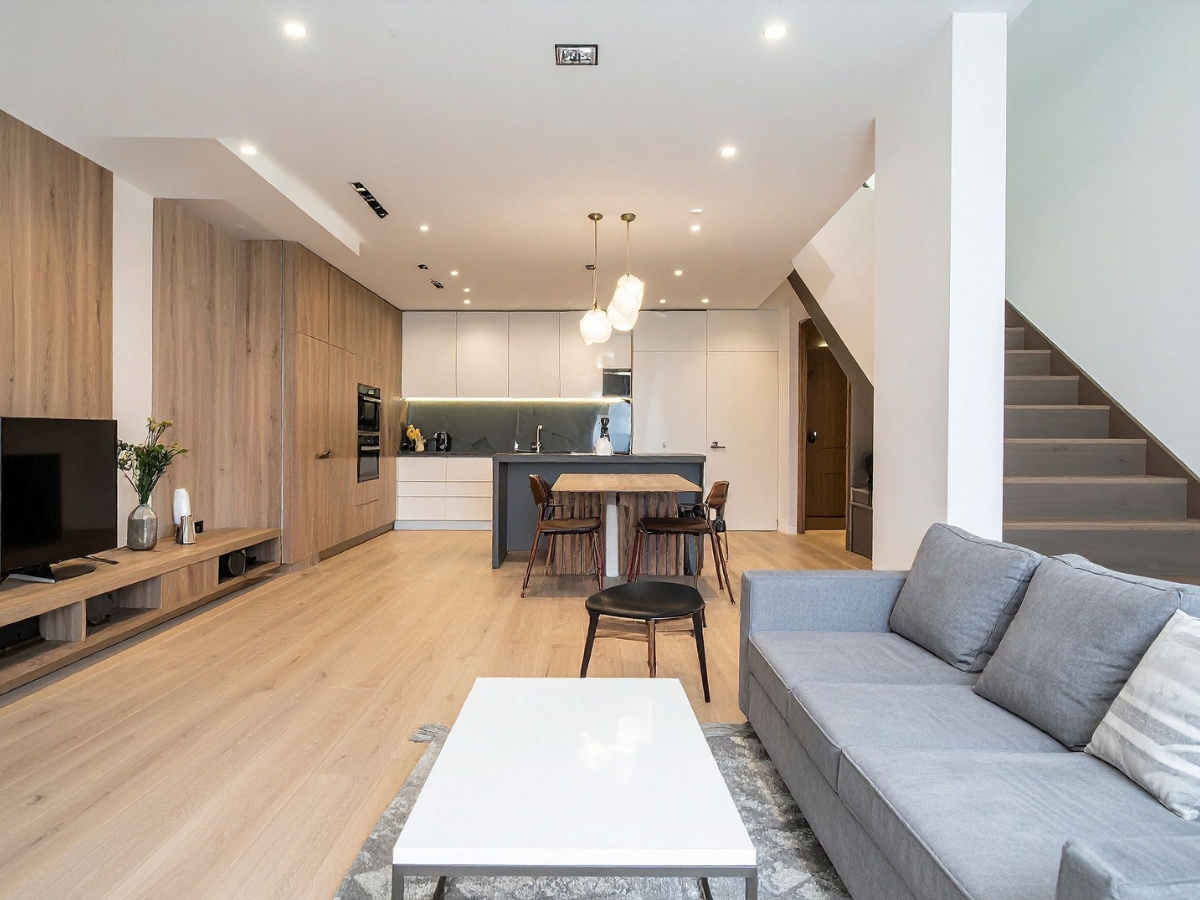
In open layouts, the best floors do two jobs at once: they tie the whole space together visually and still hold up to very different demands in the kitchen, dining area, and main living zones. When you are comparing the top flooring options for open-concept homes in Lithia Springs, it helps to start with a simple map of how the space actually works. Note where people enter from outside, where kids tend to drop bags and shoes, and where water or food spills are most likely. That quick sketch will tell you which areas need high moisture resistance and which ones mainly need comfort and warmth.
From there, decide whether a single material can reasonably cover the entire footprint or whether a mixed approach makes more sense. Many homeowners lean toward one dominant material, such as engineered hardwood or luxury vinyl plank, and then use it across as much of the open plan as possible. Keeping color, plank width, and finish consistent reduces visual breaks and helps the whole level feel larger and calmer. If you do have to change materials, try to stay within a similar tone family so the transitions feel intentional instead of jarring.
Practical limits matter just as much as aesthetics. Subfloor condition, existing height differences, and humidity exposure will influence whether solid wood, engineered wood, waterproof LVP, or tile is realistic. In Lithia Springs, where humidity and temperature swings can affect flooring, many open-concept homes do well with engineered hardwood or quality vinyl that can handle those changes better than traditional solid planks. Thinking through these details early keeps your short list focused on options that look good and perform well long term.
Instead of working from a long checklist, walk your space mentally from the front door through the kitchen and into the main living area. Ask how often floors get wet near each entrance, how much direct sun hits the surfaces, and how often chairs are dragged or heavy items are moved. Answering those questions will naturally guide you toward the top flooring options for open-concept homes in Lithia Springs that match real daily use, not just a product sample on a showroom wall.
What Are Effective Flooring Transition Techniques for Open-Concept Designs?
Even when you plan for one main surface, most open plans still have at least a few transitions. Good transitions feel quiet and deliberate. The cleanest option is to continue the same flooring throughout when performance allows it, which eliminates thresholds and keeps your eye moving smoothly from one area to the next. When you do need to shift from one material to another, low profile, color matched trims help keep the seam subtle so attention stays on the room rather than the floor break.
Alignment is just as important as the trim itself. Running planks in the same direction across adjoining areas or lining up tile grout joints with board edges reduces visual noise at room boundaries. Careful subfloor preparation keeps transitions level, which not only looks better but also improves safety and comfort underfoot. When you want to highlight a specific zone, such as a small entry in an open plan, an inlaid tile rectangle or a clearly defined border can mark that change without chopping up the rest of the space.
Here is a quick reference for common transition strategies:
| Transition Type | When to Use | Visual Result / Cost/Complexity |
|---|---|---|
| Continuous same flooring | One material works for the whole open footprint | Seamless flow, very low visual interruption, higher material use |
| Color matched transition strip | Materials change but floor heights are similar | Soft, subtle seam, low to medium cost, relatively simple work |
| Reducer or threshold | Slight level differences between surfaces | Gentle step between areas, medium cost and complexity |
| Grouted seam or tile inlay | To create a clear, intentional boundary or entry zone | Defined border, design focused, medium to higher investment |
Choosing the right transition for each boundary lets you balance function and appearance without breaking up the open feel you are trying to create.
How Does Flooring Choice Affect Visual Flow and Spaciousness?
Flooring color, plank width, pattern, and sheen all change how an open-concept home feels day to day. Lighter tones usually bounce more light around and can make long sightlines feel airy, while very dark floors tend to show dust and can visually shrink a space if walls and furnishings are also dark. Mid tone finishes often strike a good balance for busy homes, hiding everyday wear while still feeling warm and welcoming.
Plank width and pattern influence how calm or busy the floor appears. Wider planks with consistent grain generally create a more relaxed backdrop, which works well when you have a lot of cabinetry, furniture, or decor in view at once. Narrow boards, heavy color variation, or high contrast patterns can be attractive, but in large open areas they may read as busy if not balanced with simpler furnishings. Choosing a matte or low sheen finish also helps disguise minor scratches and keeps glare under control when sunlight streams across long runs of flooring.
By weighing these visual factors alongside durability and moisture performance, you can select a floor that not only holds up to daily life but also supports the open, connected feeling that makes these layouts so appealing in Lithia Springs homes.
What Maintenance And Durability Factors Should You Consider For Open-Concept Flooring?
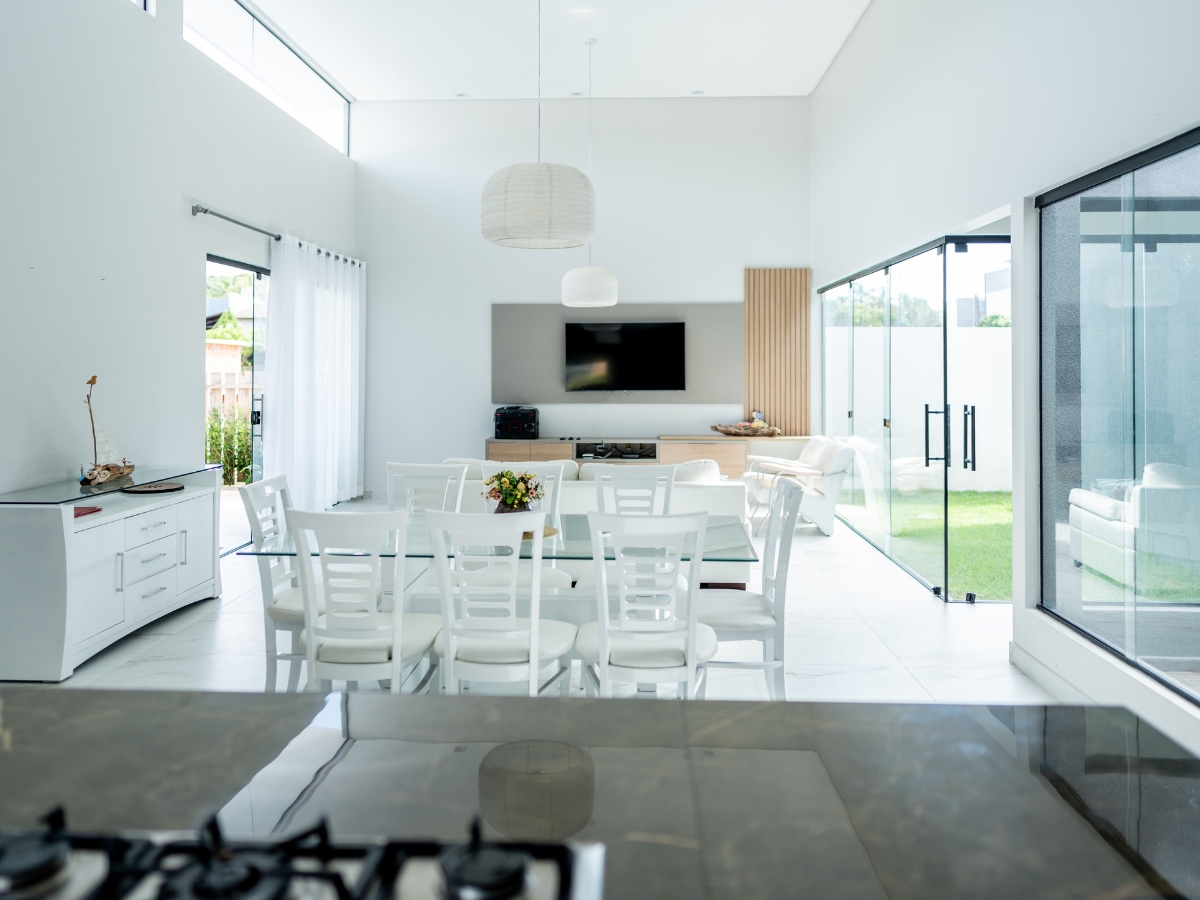
In an open-plan home, one floor usually handles everything: cooking spills, pet traffic, kids’ play, and the constant movement between rooms. That is why maintenance and durability should sit right beside style when you compare the top flooring options for open-concept homes in Lithia Springs. The most visible wear almost always shows up along main walkways and in multi-use zones, so you want a surface that looks good in those areas and is realistic to care for week after week.
Durability comes down to how well a floor resists scratches, dents, moisture, and long-term color change. Scratch resistance matters if you have pets or heavy chairs that move often, while water tolerance is essential when the kitchen, dining area, and living room all share a continuous surface. Refinishing potential is another key factor. A refinishable floor, such as engineered hardwood with a good wear layer, can recover from years of use and still keep the open layout feeling cohesive, which can be a strong value add for homes in Lithia Springs.
Maintenance should match your habits, not an ideal you hope to keep up. If you know you prefer quick sweeping and occasional damp mopping, a low-maintenance choice like luxury vinyl plank or porcelain tile may fit better than a floor that needs more careful cleaning and humidity control. The goal is to choose from the top flooring options for open-concept homes in Lithia Springs with a clear sense of what day-to-day care will actually look like.
Here is a straightforward comparison of routine care for common materials:
| Material | Recommended Care |
|---|---|
| Hardwood (solid/engineered) | Sweep regularly, use a damp mop with a finish-safe cleaner, manage humidity, refinish roughly every 7 to 15 years as needed |
| Luxury Vinyl Plank (LVP) | Sweep or vacuum, damp mop with manufacturer-approved cleaners, avoid abrasive pads, replace damaged planks if required |
| Laminate | Sweep, limit moisture, wipe spills right away, replace damaged boards rather than refinishing |
| Porcelain Tile | Sweep and mop, keep grout lines clean, reseal grout when recommended to prevent staining |
This kind of side-by-side view helps you see how much effort each surface will require over time and how that affects long-term costs in an open-concept home.
Which Flooring Materials Are Best For High-Traffic Open-Concept Areas?
In high-traffic open-plan spaces, luxury vinyl plank and large-format porcelain tile are often the workhorses. Both handle abrasion and everyday moisture very well, which makes them good fits for families, pets, and frequent entertaining. LVP is popular because it offers a softer, quieter feel underfoot with strong scratch resistance and fully waterproof construction in many product lines.
Engineered hardwood sits in the middle. It delivers the look and warmth of real wood that many homeowners want in a large, connected space, while its layered construction gives better stability than solid wood in changing humidity. It will not shrug off standing water the way LVP or tile can, but it can be refinished in many cases, which gives you a way to refresh a worn surface without changing the overall design.
Laminate is typically the budget-conscious option. It handles surface wear well but needs more protection from spills, since moisture at the seams can cause swelling. If you go this route in an open-concept layout, plan to be disciplined about wiping up water quickly, especially near sinks, dishwashers, and exterior doors.
How Can You Maintain Hardwood, LVP, And Tile Floors In Open-Plan Homes?
Regardless of material, a few simple habits go a long way in keeping open-concept floors looking consistent from one end of the space to the other. Daily or near-daily removal of grit with a broom or vacuum prevents scratches, especially along main paths from the entry through the kitchen and into the living area. Regular damp mopping with cleaners that match the product’s recommendations removes residues without dulling finishes.
Hardwood floors benefit from steady indoor humidity, gentle microfiber mops, and quick attention to spills. Luxury vinyl plank responds well to basic sweeping and light mopping, as long as you skip harsh chemicals and abrasive pads that could damage the wear layer. Porcelain tile is very durable, but grout lines need occasional deep cleaning and periodic sealing to avoid staining.
Protective touches help preserve the seamless look that open-concept homes are known for. Area rugs in key traffic lanes absorb much of the day-to-day wear, felt pads under furniture prevent point damage when chairs or tables move, and a simple habit of leaving heavy grit at the door lowers the overall load on the finish. When more significant repairs or a full refinish are needed, a professional flooring contractor can match color and sheen so the work blends smoothly into the rest of the space. Over time, that combination of smart material choice and consistent care keeps your open-plan floors attractive and functional across the entire footprint.
Why Choose Diaz Hardwood Floors For Your Open-Concept Flooring Project In Lithia Springs?

When you are comparing the top flooring options for open-concept homes in Lithia Springs, the installer you choose matters just as much as the product on the box. Diaz Hardwood Floors serves Metro Atlanta, including Lithia Springs, and works every day with hardwood, luxury vinyl plank, laminate, and carpet in large, connected spaces. That experience helps the team recommend materials that match local humidity, lifestyle needs, and resale expectations, then install them in a way that keeps the entire main level feeling consistent instead of chopped into zones.
Open-concept layouts put extra pressure on transitions and layout details, because sightlines usually run from the front door straight through the kitchen and living areas. Diaz Hardwood Floors focuses on clean plank layouts, straight seams, and thoughtful threshold choices so the flooring reads as one intentional surface rather than several rooms stitched together. That means careful attention to subfloor prep, plank direction, and trim so there are no distracting height changes or busy patterns where materials meet.
Homeowners who are still weighing the top flooring options for open-concept homes in Lithia Springs can also benefit from local insight about how different products age in real houses. The team regularly sees how hardwood, LVP, laminate, and tile perform under pets, kids, and heavy traffic, and can talk through trade-offs before you commit to a material or finish. Free quotes and in-home measurements help turn that guidance into a practical plan and budget instead of guesswork.
What Makes Diaz Hardwood Floors A Trusted Flooring Contractor In Lithia Springs?
Diaz Hardwood Floors brings hands-on experience across solid and engineered hardwood, luxury vinyl, laminate, and carpet, which is valuable when one project can easily include more than one material. Instead of sending different crews for each type of floor, you work with a single company that understands how to keep expansion gaps, transitions, and finishes coordinated from room to room. That kind of consistency is especially important when a kitchen, dining area, and family room all share one continuous view.
Because the company regularly works in Lithia Springs and the larger Atlanta area, the installers are familiar with the way local humidity, slab conditions, and older subfloors affect long-term performance. They know when engineered hardwood is a better fit than solid, where waterproof vinyl makes sense near exterior doors, and how to prepare subfloors so floors stay flat and quiet. Clear communication around scheduling, dust control, and furniture movement also helps projects feel manageable, even when most of the main level is getting new flooring at once.
Quality checks at the end of the job focus on the details that stand out in open-concept homes: straight lines at long sightlines, tight seams in high-traffic paths, and transitions that feel natural underfoot. The goal is a finished floor that looks like it was planned with the house from the start, not added in pieces over time.
How Can You Get A Free Quote And Consultation For Open-Concept Flooring?
Planning new flooring for an open layout is easier when you bring a bit of structure to the first conversation. Before you meet with a flooring contractor such as Diaz Hardwood Floors, gather room measurements, photos of the existing space, notes about pets and daily traffic, and any information about past moisture or subfloor issues. This gives the installer enough context to suggest which materials from the top flooring options for open-concept homes in Lithia Springs are most realistic for your budget and lifestyle.
During a consultation, expect to review material choices, talk through which areas will share one surface and where transitions might be needed, and discuss installation sequencing so your household can keep functioning while work is underway. A clear written quote should outline prep work, product details, transition pieces, and an estimated timeline, which makes it easier to compare bids and avoid surprises later.
Once those details are in place, you have a roadmap: you know which flooring type suits your open-concept layout, how it will be installed, and what it will take to maintain it. That combination of local expertise, clear planning, and careful installation is what turns an idea on paper into a main level that feels larger, more cohesive, and better suited to everyday life in Lithia Springs.
Frequently Asked Questions
What are the benefits of using laminate flooring in open-concept homes?
Laminate is a cost-effective option that mimics hardwood while offering good scratch and dent resistance, making it suitable for busy, high-traffic areas. Many laminate products use click-lock systems that simplify installation for DIYers. Its main limitation is water resistance — keep laminate out of consistently wet areas. Homeowners like laminate for its affordability and wide range of styles that blend easily into open layouts.
How does humidity in Lithia Springs affect flooring choices?
Humidity in Lithia Springs affects materials like solid hardwood, which can expand and contract with moisture changes. Engineered hardwood is often a better choice here because its layered construction resists dimensional change. Luxury vinyl plank (LVP) is another strong option since it’s waterproof and won’t react to humidity the way wood can. Consider local climate when choosing materials to ensure longevity and consistent appearance.
What are the best flooring options for homes with pets?
For homes with pets, prioritize durability and easy cleaning. LVP is a top pick thanks to scratch resistance and waterproof performance. Porcelain tile is highly durable and simple to maintain. Laminate can work if you choose a high-quality product and avoid excess moisture. Look for finishes and surface textures that hide wear and make cleanup straightforward.
How can I enhance the acoustics in an open-concept home with flooring?
To improve acoustics, add sound-absorbing layers and soft surfaces. Carpet does the most to reduce noise, but if you prefer hard floors, use area rugs and quality underlayment designed for sound reduction. LVP and laminate paired with acoustic underlay can help, and adding curtains and upholstered furniture further softens reverberation in large open spaces.
What are the environmental impacts of different flooring materials?
Environmental impacts vary: hardwood can be sustainable when sourced responsibly — look for FSC certification. LVP contains PVC, which raises concerns about production and disposal, though some manufacturers offer recycling programs. Bamboo is a rapidly renewable hardwood alternative. When choosing materials, consider lifecycle impacts, certifications, and local recycling or disposal options.
What should I consider when transitioning between different flooring types?
When changing flooring types, consider height differences, material compatibility, and visual continuity. Transition strips smooth height changes, and color-matched or similar tones help maintain cohesion. Plan layouts to reduce abrupt changes where possible. A professional installer can recommend the best transition techniques to ensure a seamless and attractive result.
Conclusion
Choosing the top flooring options for your open-concept home in Lithia Springs requires a thoughtful balance of style, durability, and flow to create a cohesive and inviting space. From seamless luxury vinyl plank to classic hardwoods, the ideal material should unify your living areas while meeting the demands of your lifestyle. At Diaz Hardwood Floors, we guide you through every step—from selection to expert installation—ensuring your floors become the perfect foundation for your home. Ready to bring your vision together? Call 404-791-0444 today or reach out through our site form for a consultation and let us help you build a beautiful, connected space from the ground up.