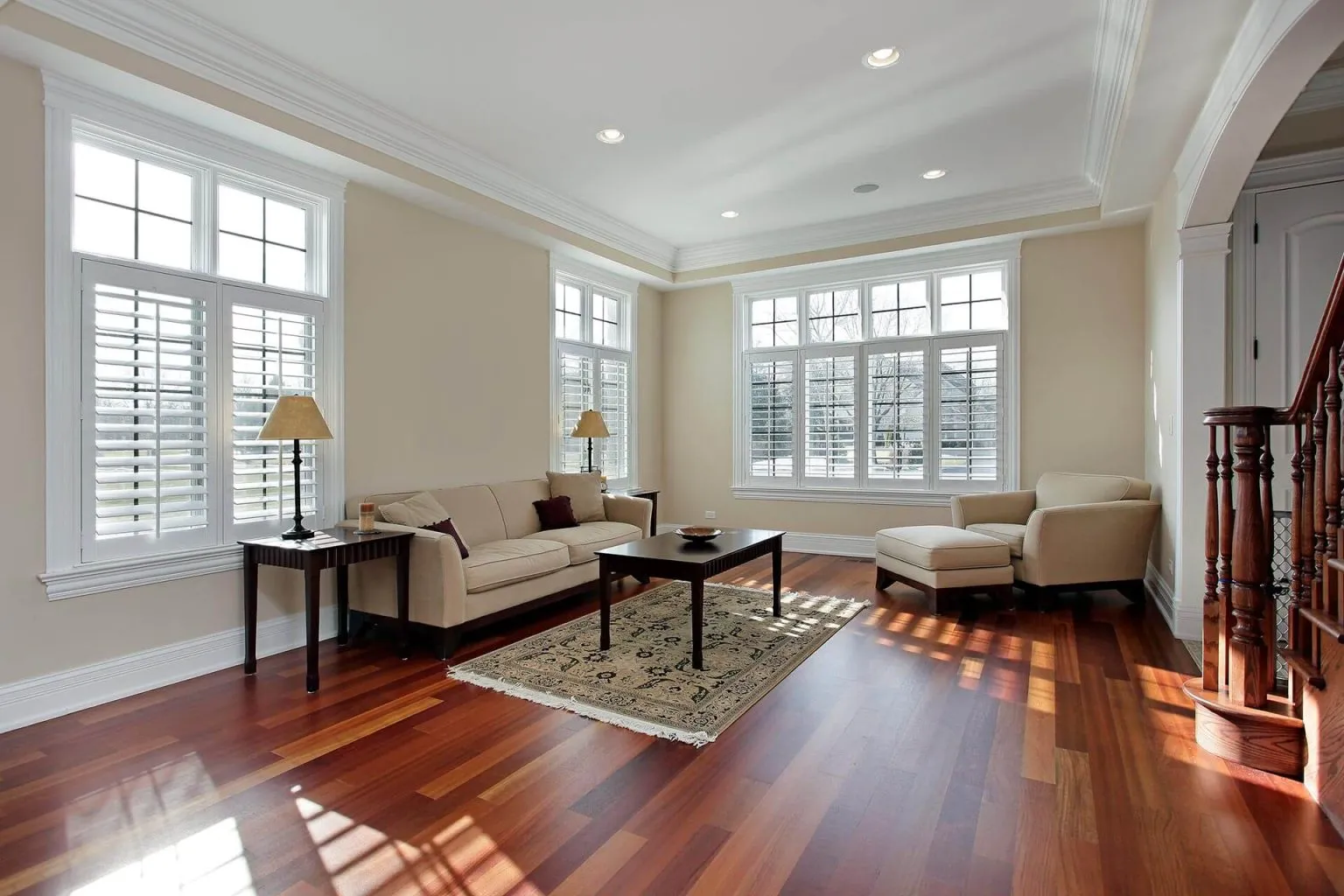
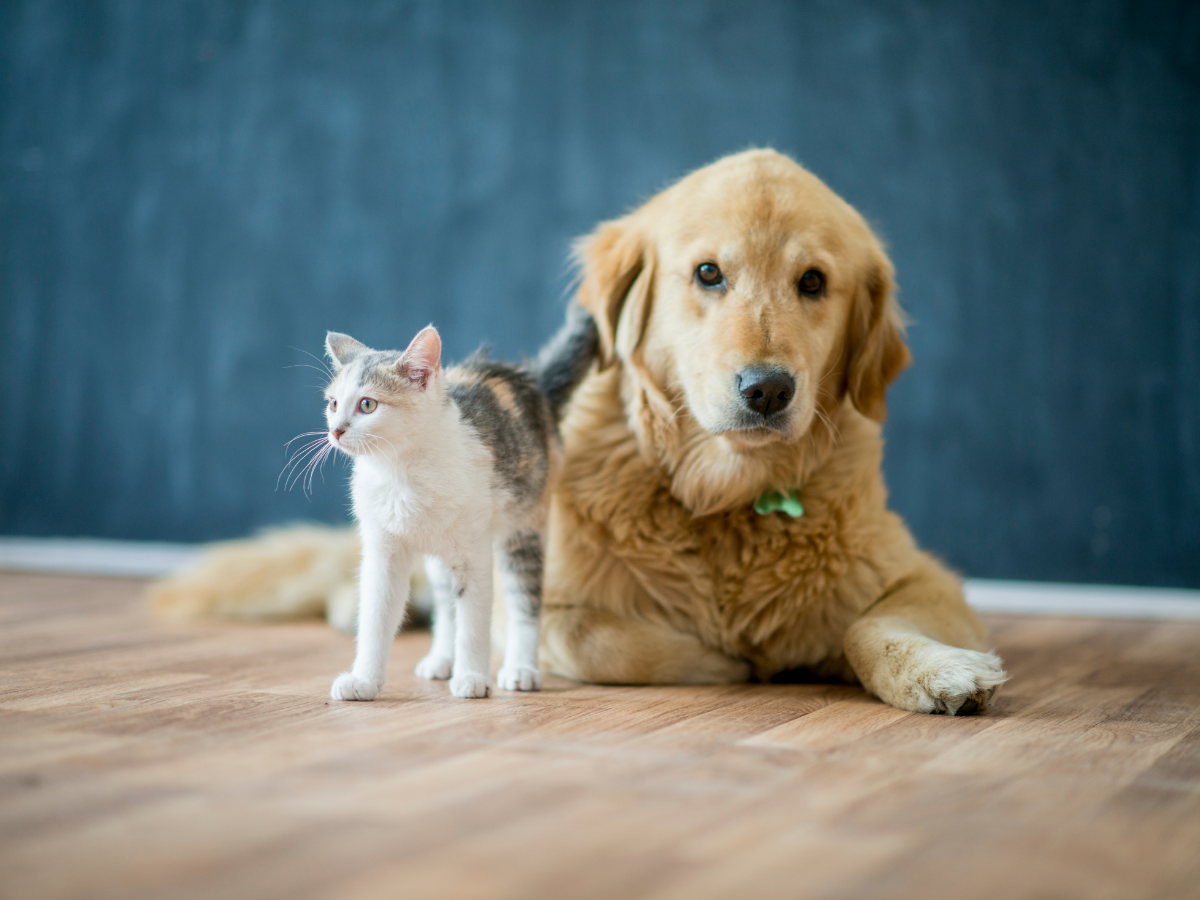
Muddy paws, spilled water bowls, accidents, and the unmistakable sound of claws racing across the floor can put household surfaces through a serious durability test. For pet owners, choosing flooring based on appearance alone can quickly lead to scratches, stains, swelling, or frustrating maintenance.
The best pet-friendly flooring options balance comfort and style with scratch resistance, waterproof performance, and easy cleaning.
Luxury vinyl, tile, laminate, and certain engineered flooring products can all perform well in homes with dogs or cats, but each comes with different strengths, limitations, and maintenance needs.
Comparing how these materials handle moisture, claws, traction, shedding, and everyday wear can help you choose durable flooring that suits your pets without making your home feel like it was designed around them.
Pet-Friendly Flooring for Scratch and Water Resistance
What Are the Best Scratch-Resistant Flooring Materials for Pets?
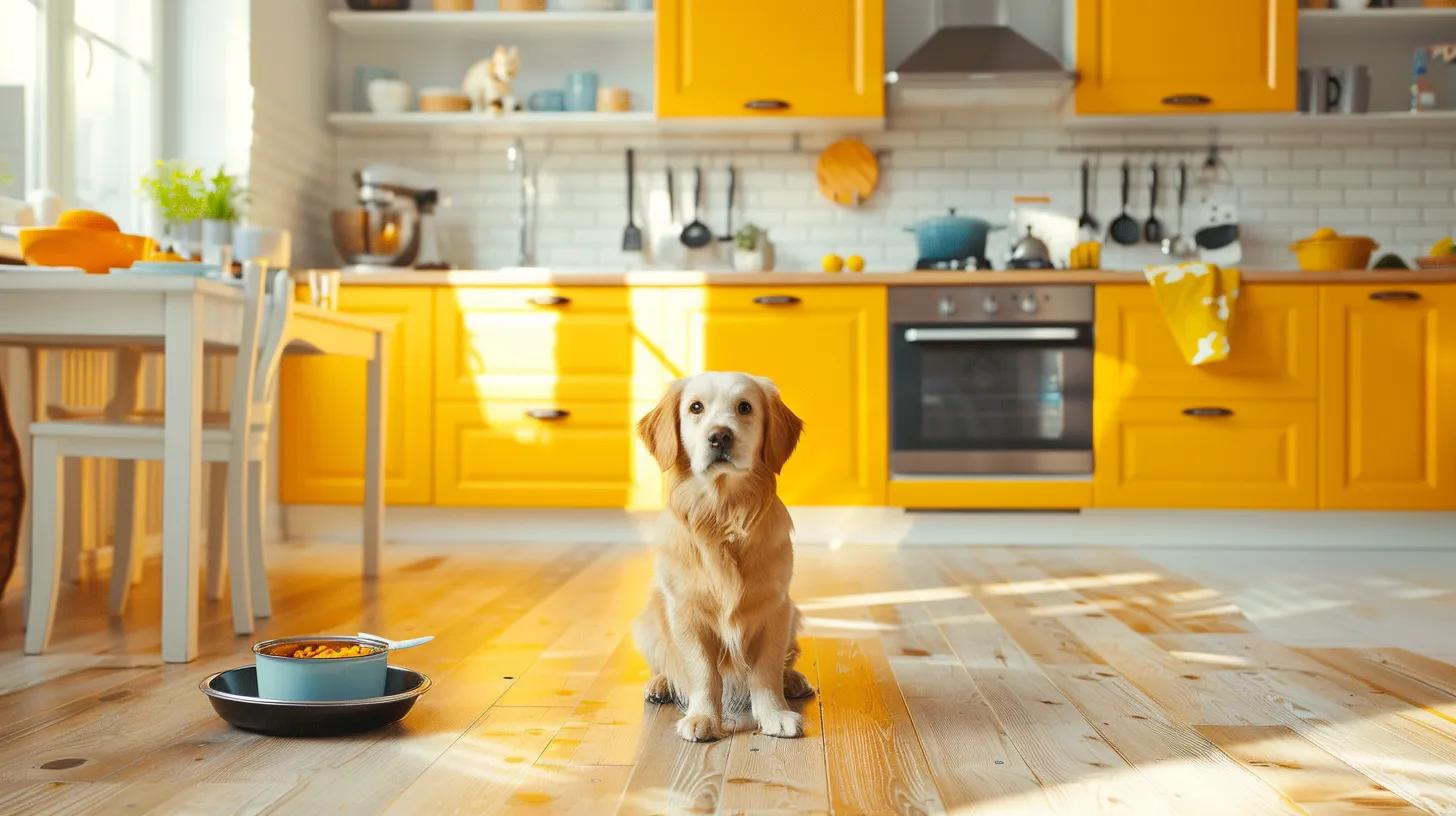
The best pet-friendly flooring needs to handle more than claw marks. Dogs and cats can also bring in grit, spill water, have accidents, and create repeated wear along the same paths through a home.
That makes scratch resistance important, but it should be considered alongside moisture resistance, traction, comfort, and ease of cleaning.
Luxury vinyl plank, laminate, and tile are among the strongest options for households where durability is the main concern. Engineered hardwood can also work well when homeowners want real wood, while cork and rubber serve more specialized needs.
| Flooring Type | Scratch Resistance | Moisture Performance | Pet Comfort | Best Fit |
|---|---|---|---|---|
| Luxury vinyl plank | Very good | Excellent | Moderate | Active pets, spills, high-traffic rooms |
| Laminate | Very good | Varies by product | Moderate | Dry rooms where scratches are the main concern |
| Porcelain or ceramic tile | Excellent | Excellent | Firm, cool surface | Entryways, kitchens, accident-prone areas |
| Engineered hardwood | Moderate to good | Moderate | Comfortable | Homes prioritizing real wood |
| Cork | Moderate | Limited unless properly sealed | Soft and warm | Lower-traffic spaces |
| Rubber | Very good | Excellent | Cushioned | Utility rooms, mudrooms, pet areas |
Luxury Vinyl Plank Balances Scratches, Spills, and Easy Cleanup
Luxury vinyl plank, or LVP, is one of the most practical choices for homes with active pets. Its protective wear layer helps resist everyday scuffs and claw marks, while many products are designed to tolerate spills and pet accidents better than wood-based flooring.
The material is also available in convincing wood and stone visuals, making it useful for homeowners who want durability without giving up the appearance of traditional flooring.
Not all vinyl performs the same, however. Wear-layer construction, surface texture, overall product quality, and installation all influence how the floor holds up. Even durable vinyl is not scratch-proof, especially when grit becomes trapped under paws or furniture.
For a broader comparison of materials designed for busy households, durable high-traffic flooring offers useful context on how LVP, laminate, tile, and engineered hardwood perform under frequent use.
Laminate Is Strong When Scratch Resistance Is the Priority
Laminate flooring uses a hard protective wear layer over a decorative surface, which can make it highly resistant to scratching and everyday abrasion.
That makes laminate appealing in hallways, living rooms, and other areas where pets frequently run or play. Textured wood-look finishes can also help disguise minor wear better than smooth, high-gloss surfaces.
Moisture is where homeowners need to read product specifications carefully. Some modern laminate products provide substantial water resistance, while others remain vulnerable if liquid sits along plank seams. A product marketed as water-resistant should not automatically be treated as waterproof.
Regular sweeping or vacuuming is particularly important because sand and grit can act like abrasives under paws. Proper laminate floor care can reduce scratching and premature surface wear.
Tile Offers Exceptional Resistance to Claws and Accidents
Porcelain and ceramic tile are difficult for pet claws to scratch, making them strong choices for kitchens, entryways, mudrooms, and other spaces exposed to moisture and heavy traffic.
They also make spills and accidents relatively easy to clean when the tile and grout are maintained properly.
The tradeoff is comfort. Tile is hard and can feel cold or slippery, especially for older dogs or pets with mobility issues. A matte or lightly textured finish can provide better traction than highly polished tile. Washable rugs or pet beds can add softer resting areas without sacrificing the durability of the main floor.
Engineered Hardwood Can Work in Pet-Friendly Homes
Homeowners who want genuine wood do not necessarily have to rule it out. Engineered hardwood can provide greater dimensional stability than traditional solid hardwood, while harder wood species and durable factory-applied finishes can improve resistance to dents and surface wear.
No real wood floor is immune to claw marks. A lower-gloss or textured finish can make small scratches less noticeable than a smooth, glossy surface, and keeping pet nails trimmed helps limit damage.
For households choosing pet-friendly flooring primarily for maximum scratch and moisture resistance, LVP or tile may require less upkeep. For homeowners who place greater value on the appearance and feel of real wood, engineered hardwood can be a reasonable compromise.
Cork Is Comfortable but Requires More Care
Cork feels warmer and softer underfoot than tile, laminate, or many vinyl products, which can make it appealing for pets that spend a lot of time lying or walking on the floor.
Its softer surface is also its main limitation. Claws, heavy furniture, and repeated traffic can leave marks or indentations more easily than on harder materials.
Cork should also not be treated as universally waterproof. Performance depends on the product, finish, sealing, installation, and how quickly moisture is cleaned up.
For that reason, cork usually makes more sense in lower-traffic rooms than in entryways or areas where pet accidents are frequent.
Rubber Flooring Works Best in Specialized Pet Areas
Rubber flooring is durable, moisture-resistant, slip-resistant, and cushioned, but it is rarely the first choice for a formal living room or whole-home installation.
Its strengths make it better suited to mudrooms, utility areas, home gyms, dog-washing spaces, or dedicated pet areas where traction and easy cleanup matter more than matching traditional interior flooring.
Which Flooring Is Best for Homes With Active Pets?
There is no single material that wins every category. For many households, LVP provides the strongest overall balance of scratch resistance, moisture protection, easy cleaning, and design flexibility.
Laminate can be an excellent choice when surface wear is the main concern and standing moisture is less likely. Tile offers outstanding durability but sacrifices some warmth and comfort.
The best pet-friendly flooring also depends on the pets themselves. A large dog that runs through the house creates different demands than an indoor cat, a senior pet with limited traction, or a puppy still being house-trained.
Instead of looking for a floor labeled simply “pet-proof,” compare the actual wear surface, moisture rating, texture, finish, and maintenance requirements. That produces a flooring choice better matched to how the home is really used.
How Does Waterproof Pet Flooring Protect Against Stains and Moisture Damage?
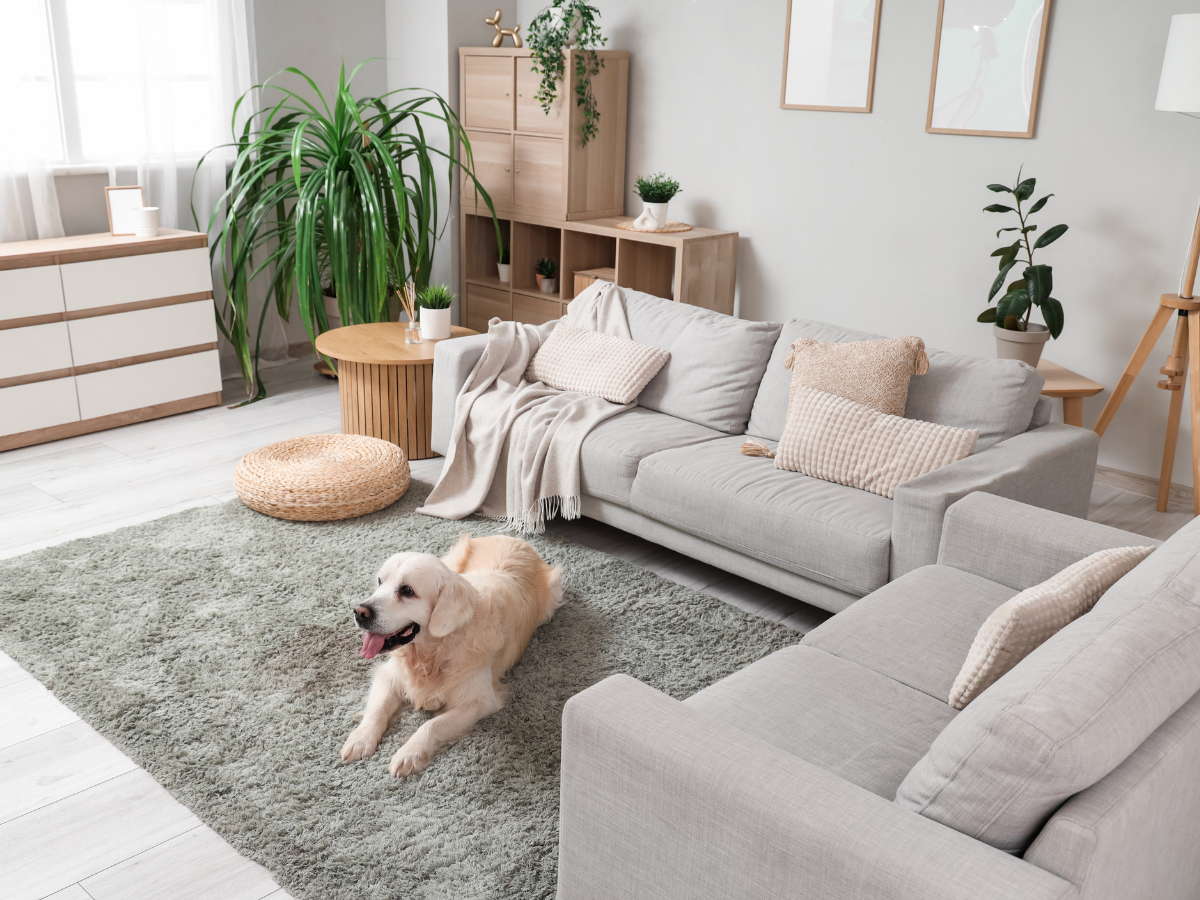
Waterproof flooring can be especially valuable in homes with pets because spills and accidents are not always discovered immediately. A knocked-over water bowl may sit unnoticed, wet paws can repeatedly track moisture across an entryway, and pet urine can reach plank seams before cleanup begins.
The best pet-friendly flooring for these conditions does more than resist surface stains. It limits how easily moisture can penetrate the flooring material, damage the core, or reach the subfloor below.
That said, “waterproof” and “water-resistant” are not interchangeable terms. Understanding that distinction is essential when comparing vinyl, laminate, tile, and other flooring options.
Waterproof and Water-Resistant Flooring Are Not the Same
Waterproof flooring is designed so the flooring material itself can tolerate water exposure without swelling or permanently deteriorating under the conditions specified by the manufacturer.
Water-resistant flooring can handle some moisture, but usually only for a limited amount of time. If liquid remains on the surface or enters vulnerable seams, damage may still occur.
This distinction matters for pet owners because accidents are different from a glass of water that is immediately wiped up. Urine, water from pet bowls, or repeated wet-paw traffic may remain on the floor longer than expected.
Always check the manufacturer’s specifications rather than assuming that a flooring category is universally waterproof.
Luxury Vinyl Is One of the Strongest Choices for Moisture-Prone Pet Areas
Luxury vinyl plank and tile are popular in pet-friendly homes because vinyl itself performs well around moisture and is relatively easy to clean.
That makes it useful in kitchens, mudrooms, entryways, laundry areas, and other spaces where pets may bring in water or have accidents. Its protective wear layer also helps the surface withstand everyday abrasion from claws and foot traffic.
Homeowners considering vinyl flooring should still compare individual products rather than relying on the material name alone. Wear-layer construction, plank quality, surface texture, locking systems, and installation requirements can all affect long-term performance.
Waterproof does not mean indestructible. Sharp claws, trapped grit, dragged furniture, and improper cleaning products can still damage the surface.
Laminate Requires More Careful Product Comparison
Laminate can provide excellent scratch resistance, which makes it attractive for active dogs and other pets. Its moisture performance varies much more widely.
Traditional laminate uses a wood-based core that can swell if water reaches it. Newer products may use improved cores and edge treatments that provide substantially greater water resistance, and some manufacturers market particular collections for enhanced protection against spills.
The important point is to evaluate the specific product. Do not assume that all laminate is waterproof because one product line carries that claim. Check the manufacturer’s moisture rating, warranty terms, allowable exposure time, and installation requirements.
For a home where pet accidents are frequent or likely to sit unnoticed, a genuinely waterproof material may offer more predictable protection.
Tile Provides Excellent Water and Scratch Resistance
Porcelain and ceramic tile perform especially well where pets create both moisture and heavy surface wear. The tile itself will not swell because of a water bowl spill, and claws are unlikely to scratch a properly selected tile surface.
These qualities make tile particularly practical for entryways, kitchens, mudrooms, and pet-washing areas. Grout deserves separate consideration. Depending on the grout type and installation, staining and maintenance may still be concerns even when the tile itself handles moisture easily.
Texture also matters. Highly polished tile can become slippery when wet, which may be uncomfortable for older pets or animals with mobility problems. A matte or textured surface can provide better traction.
Installation Determines How Well the Whole Floor Handles Moisture
Choosing a waterproof plank does not automatically make the entire flooring system immune to water. Moisture can sometimes move through perimeter gaps, damaged joints, transitions, or areas around penetrations. Poorly prepared subfloors or incorrectly installed locking systems can also affect performance.
This becomes particularly important with pet accidents because liquid can spread beyond the obvious wet spot.
Follow the manufacturer’s installation requirements for expansion gaps, underlayment, transitions, and perimeter treatments. If a product requires specific installation methods to maintain its moisture warranty, those details should be part of the flooring decision before installation begins.
Stain and Odor Resistance Matter Alongside Waterproofing
Water resistance addresses only one part of a pet accident. The flooring surface should also be easy to clean without absorbing stains or retaining odor. Nonporous materials such as vinyl and tile generally perform well in this respect, provided liquid does not reach vulnerable joints or surrounding materials.
Prompt cleanup still matters even with waterproof flooring. Pet urine contains compounds that can leave residue or odor if allowed to dry, and some cleaning products may discolor or damage a flooring finish.
Use cleaners approved by the flooring manufacturer rather than automatically reaching for bleach, strong acids, abrasive products, or steam cleaners.
How to Balance Scratch Resistance and Water Protection
For many pet households, the strongest flooring choice is not simply the material with the highest rating in one category.
A useful comparison should include:
- Resistance to pet claws and surface abrasion
- Protection against spills and accidents
- Ease of cleaning
- Traction when dry and wet
- Visibility of scratches on the chosen finish
- Product warranty and moisture limitations
- Comfort for the pets living in the home
Luxury vinyl often provides one of the best overall combinations of moisture resistance, scratch performance, and easy maintenance. Tile offers even greater resistance to water and claw damage but is harder underfoot.
Laminate can be an excellent scratch-resistant choice when the specific product provides enough moisture protection for the household.
The right pet-friendly flooring depends on which problem is most likely to occur in that particular room. A mudroom used by a large dog after rainy walks may need different flooring than an upstairs bedroom shared with an indoor cat.
Matching the material to the actual exposure is more useful than looking for a single floor marketed as “pet-proof.”
What Maintenance Helps Pet-Friendly Flooring Last Longer?
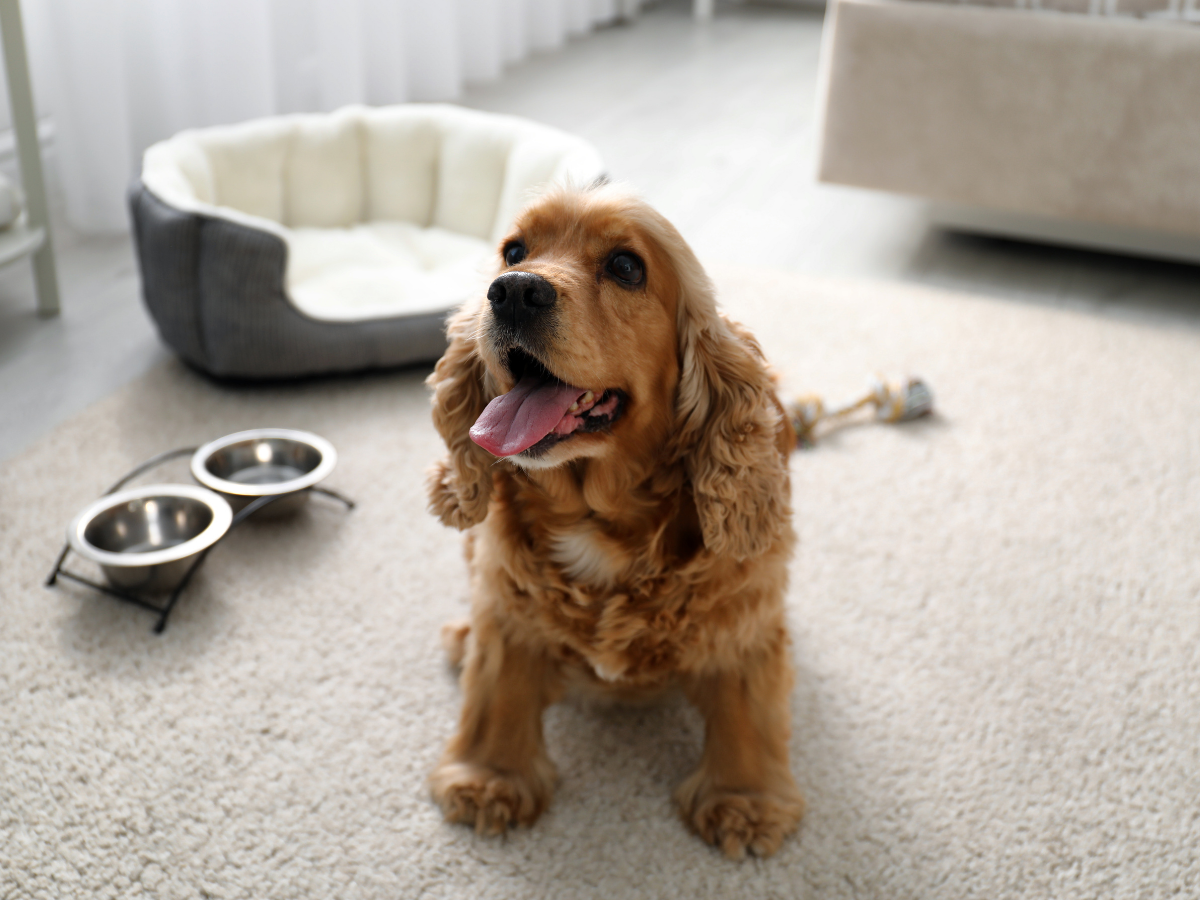
Durable flooring still needs regular care in a home with pets. Claws, grit, tracked-in dirt, spilled water, and repeated traffic can gradually wear down even highly scratch-resistant or waterproof surfaces.
The most effective maintenance routine is not complicated. It focuses on removing abrasive debris, cleaning accidents quickly, protecting high-use areas, and following the care requirements for the specific flooring material.
Those habits can help pet-friendly flooring retain its finish and prevent minor wear from becoming permanent damage.
Remove Grit Before It Scratches the Surface
Pet hair is usually more visible, but fine dirt and grit can be harder on flooring. Small particles carried indoors on paws can become trapped underfoot and act like abrasive material as pets move through the house. Over time, that repeated friction can dull finishes and create fine surface scratches.
Sweep, dust mop, or vacuum regularly, paying particular attention to:
- Entryways and exterior doors
- Hallways pets use repeatedly
- Areas around food and water bowls
- Spaces beneath pet beds
- Routes between outdoor doors and living areas
Use a vacuum setting or attachment designed for hard flooring. Rotating brush rolls intended for carpet can scratch some surfaces.
Keep Pet Nails Trimmed
Long nails increase the pressure placed on the floor each time a dog walks, runs, turns, or pushes off. Regular nail trimming can reduce that contact, particularly on hardwood, engineered wood, laminate, and softer resilient flooring. It also helps pets maintain better footing on smooth surfaces.
Nail care will not make a flooring material scratch-proof. Large or highly active dogs can still leave marks, especially on softer woods or high-gloss finishes. It simply removes one source of unnecessary wear.
Clean Pet Accidents as Soon as Possible
Even waterproof pet-friendly flooring benefits from prompt cleanup.
Liquid can travel into plank seams, around room perimeters, or beneath transitions before it becomes obvious. On hardwood and other moisture-sensitive materials, prolonged exposure can contribute to staining, swelling, discoloration, or finish damage.
Blot urine or spills rather than spreading them across a larger area. Then clean the surface using a product approved for the flooring material.
Pet owners should be especially cautious with homemade cleaning mixtures. Vinegar, bleach, ammonia, abrasive powders, steam, and concentrated disinfectants can damage certain finishes even when they appear effective at removing stains or odors.
General floor maintenance practices should always be adjusted to the manufacturer’s recommendations for the installed material.
Protect Food and Water Stations
Water bowls create one of the most predictable moisture zones in a pet-friendly home.
Place a waterproof or moisture-resistant mat beneath bowls, extending far enough beyond the edges to catch splashes. Clean underneath the mat periodically rather than leaving it in place indefinitely, since trapped moisture or debris can affect some flooring surfaces.
Check the area for:
- Swollen plank edges
- Discoloration
- Cloudy finish
- Persistent odor
- Debris trapped beneath the mat
A floor may tolerate an occasional spill well while still being damaged by moisture that remains trapped in the same spot day after day.
Use Rugs Where Pets Create Repeated Traffic
Area rugs and runners can protect floors in predictable wear zones such as hallways, entrances, stairs, and spaces where pets frequently turn or accelerate.
The rug itself matters, though.
Use a backing or rug pad approved for the flooring underneath it. Some rubber, latex, or chemically treated backings can discolor particular flooring finishes when left in place for extended periods.
Rugs should also remain flat and secure enough that pets do not slide or catch their paws on curled edges.
Do Not Treat Every Flooring Type the Same
Maintenance instructions differ considerably between hardwood, laminate, vinyl, and tile.
Hardwood generally requires minimal moisture and cleaning products compatible with its finish. Laminate should not be saturated, even when the product offers substantial water resistance.
Vinyl usually handles moisture more easily but can still be scratched by abrasive tools. Tile is highly durable, although grout may require separate cleaning and maintenance.
Following one universal cleaning routine across every flooring material can shorten its lifespan.
Check the flooring manufacturer’s recommendations before introducing a new cleaner, machine, polishing product, wax, or steam-cleaning method.
Move Furniture Instead of Dragging It
Pets are not responsible for every scratch in a pet household.
Furniture moved to clean underneath pet beds, toys, or feeding areas can cause deeper marks than claws. Use furniture pads and lift heavier pieces whenever possible rather than dragging them across the floor.
Inspect protective pads occasionally as well. Dirt can become embedded in worn pads and turn them into abrasive surfaces.
Watch High-Traffic Areas for Early Wear
Regular maintenance should include looking at the floor, not simply cleaning it.
Pay attention to changes in finish, repeated scratches, lifting plank edges, gaps, discoloration, loose tiles, or moisture damage. Early deterioration is often easier to address before it spreads across a larger area.
On wood flooring, for example, worn finish may leave the material itself more vulnerable to scratches and moisture. Addressing the protective surface before the wood becomes deeply damaged can preserve more of the original floor.
Adjust Maintenance to Your Pet and Your Home
There is no ideal cleaning schedule that works for every household.
A home with two large dogs that spend time outdoors will collect more grit and moisture than one with an indoor cat. A puppy may create more accident-related maintenance, while a senior dog may need rugs or runners for additional traction.
The best maintenance routine responds to those actual conditions.
Pet-friendly flooring lasts longer when homeowners prevent abrasive dirt from accumulating, keep moisture from sitting on the surface, protect repeated traffic paths, and use cleaning methods appropriate for the material.
Choosing durable flooring is important, but consistent care is what allows that durability to continue paying off over time.
How to Choose and Install Pet-Friendly Flooring for Long-Term Durability
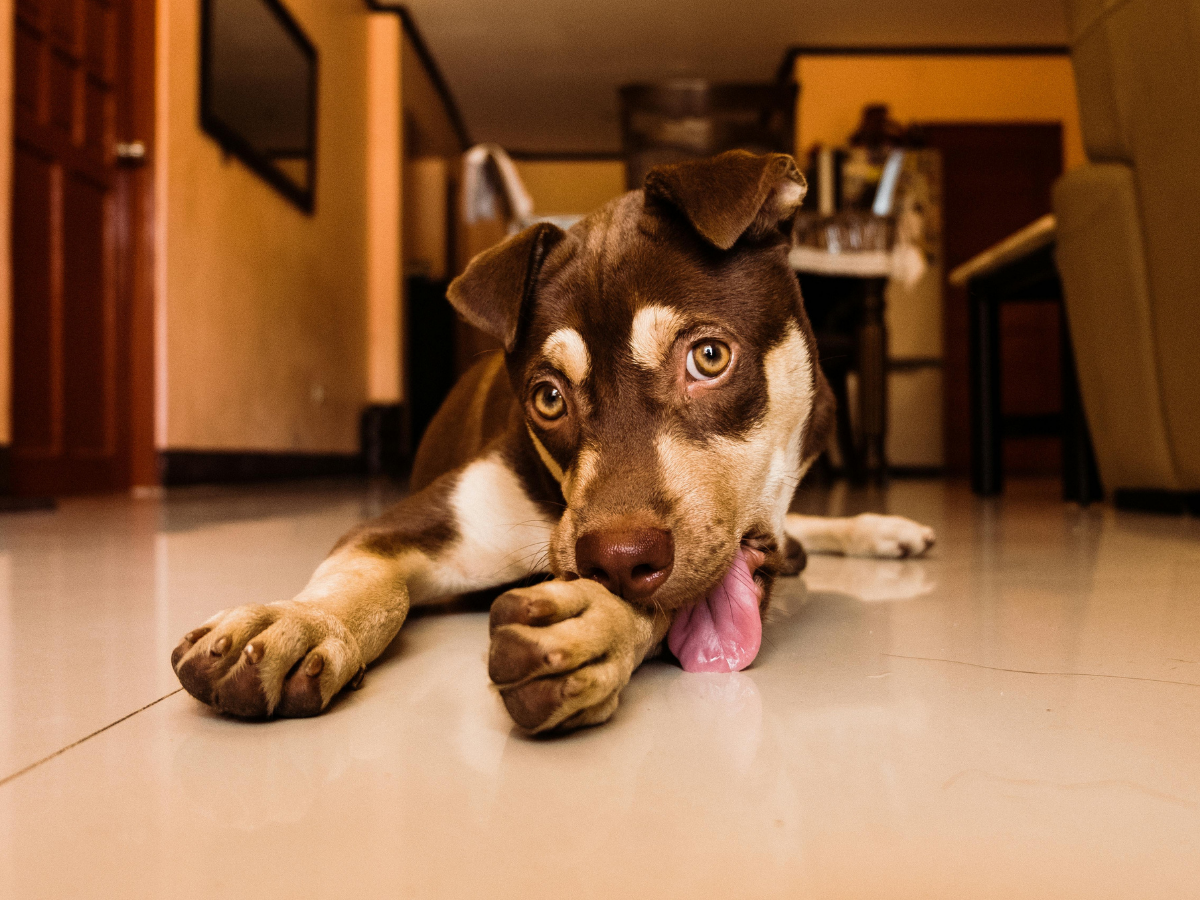
Choosing pet-friendly flooring starts with the material, but installation can determine whether that material performs as expected. A durable plank installed over an uneven or moisture-prone subfloor can develop movement, gaps, or damaged joints long before the wear surface itself fails.
For homes with pets, selection and installation should be treated as one decision. Consider how the room is used, what the flooring needs to withstand, and what the manufacturer requires for proper installation.
Match the Flooring to the Room and the Pet
The strongest material on paper is not automatically the best choice for every room.
A mudroom used by dogs coming in from outside needs excellent moisture resistance and easy cleanup. A living room may place more emphasis on scratch resistance, appearance, and comfort. Older pets may benefit from a textured surface that provides more traction, while a household with a puppy may prioritize protection against accidents.
Before choosing pet-friendly flooring, think about:
- Pet size and activity level
- Frequency of accidents or spilled water
- Amount of outdoor dirt brought inside
- Room traffic
- Need for traction
- Cleaning requirements
- Expected lifespan of the floor
These factors provide a more useful starting point than simply choosing whichever product carries a “pet-friendly” label.
Compare the Actual Product Specifications
Flooring categories provide general guidance, but individual products within the same category can perform differently.
For laminate and vinyl, compare the wear surface, moisture rating, warranty limitations, locking system, and recommended installation method. With hardwood or engineered wood, consider species hardness, finish, construction, and how visible everyday scratching is likely to be.
High-gloss surfaces tend to reveal scratches and paw marks more easily than matte, textured, or lower-sheen finishes.
No flooring should be assumed to be scratch-proof or waterproof solely because of its material category. Manufacturer specifications should guide the final comparison.
Choose Enough Texture for Safe Traction
Scratch resistance is important, but pets also need enough grip to move comfortably. Highly polished surfaces can become slippery, particularly when wet. This can be more noticeable for senior pets, large dogs, or animals with mobility limitations.
A lightly textured or matte finish can improve traction without making the floor difficult to clean. If a preferred flooring material is naturally slick, strategically placed runners can provide grip along frequently used paths.
Texture should therefore be evaluated as both a maintenance and usability feature, not merely an aesthetic choice.
Prepare the Subfloor Before Installation Begins
A durable floor needs a stable foundation.
The subfloor should be clean, sufficiently flat, structurally sound, and appropriate for the flooring system being installed. Moisture conditions may also need to be evaluated, particularly with wood-based flooring or installations over concrete.
Installing new flooring over significant unevenness can place additional stress on plank joints or create movement underfoot. Existing moisture problems should also be corrected rather than covered by the new floor.
For wood installations, proper preparation before installing hardwood flooring includes evaluating the subfloor and addressing moisture, flatness, and damaged areas before the finished flooring goes down.
Follow Acclimation and Moisture Requirements
Some flooring materials need time to adjust to conditions in the home before installation. Requirements vary by product, so the manufacturer’s instructions should determine whether acclimation is necessary and how it should be handled.
Wood flooring is especially sensitive to environmental conditions because it naturally responds to changes in moisture and humidity.
Skipping required moisture testing or acclimation can contribute to problems such as excessive gaps, cupping, or movement after installation.
Do not rely on a universal number of days. The correct process depends on the flooring product, subfloor, installation method, and environmental conditions.
Use the Correct Underlayment and Installation Method
Underlayment is not interchangeable across every flooring system.Depending on the product, it may provide sound reduction, cushioning, moisture protection, or support for a floating installation. Some planks already include an attached pad, while others require a specific underlayment to maintain warranty coverage.
The same applies to installation methods. Flooring may be floated, glued, nailed, stapled, or installed using another manufacturer-approved system.
Using an unapproved method can affect joint stability, moisture performance, and long-term durability.
Allow the Floor to Expand and Move as Designed
Many flooring systems need space to respond to changes in temperature and humidity. Expansion gaps around walls, fixed objects, transitions, and other boundaries should follow the manufacturer’s specifications.
Gaps that are too small can place pressure on the floor as materials expand, while poor transition planning can create weak points between rooms.
These details are easy to overlook because they are often hidden by baseboards or trim once the installation is complete, but they can have a significant effect on long-term performance.
Inspect the Finished Floor Before Pets Return to the Room
Before returning furniture, rugs, food bowls, and pets to the space, inspect the installation carefully.
Check for loose boards, damaged edges, uneven transitions, visible gaps, movement underfoot, and unfinished perimeter details. Confirm when the floor can safely receive normal traffic, since adhesives, finishes, or other installation materials may require curing time.
A structured post-install flooring checklist can also help identify issues with hardwood, laminate, or vinyl before everyday use begins.
Professional Installation Can Matter More for Complex Projects
DIY installation can be realistic for some click-lock flooring systems, particularly in simple rectangular rooms with a sound, level subfloor.
More complicated projects may warrant professional installation. Irregular layouts, stairs, moisture concerns, transitions between flooring heights, damaged subfloors, or hardwood installations can require considerably more planning and skill.
The decision should depend on the project rather than an assumption that professional installation is always necessary.
The strongest pet-friendly flooring combines an appropriate material with an installation that supports its intended performance.
Scratch resistance and moisture protection matter, but subfloor preparation, traction, expansion space, installation method, and post-install inspection can be just as important to how the floor performs after pets begin using it every day.
How Can Diaz Hardwood Floors Help With Pet-Friendly Laminate Flooring?
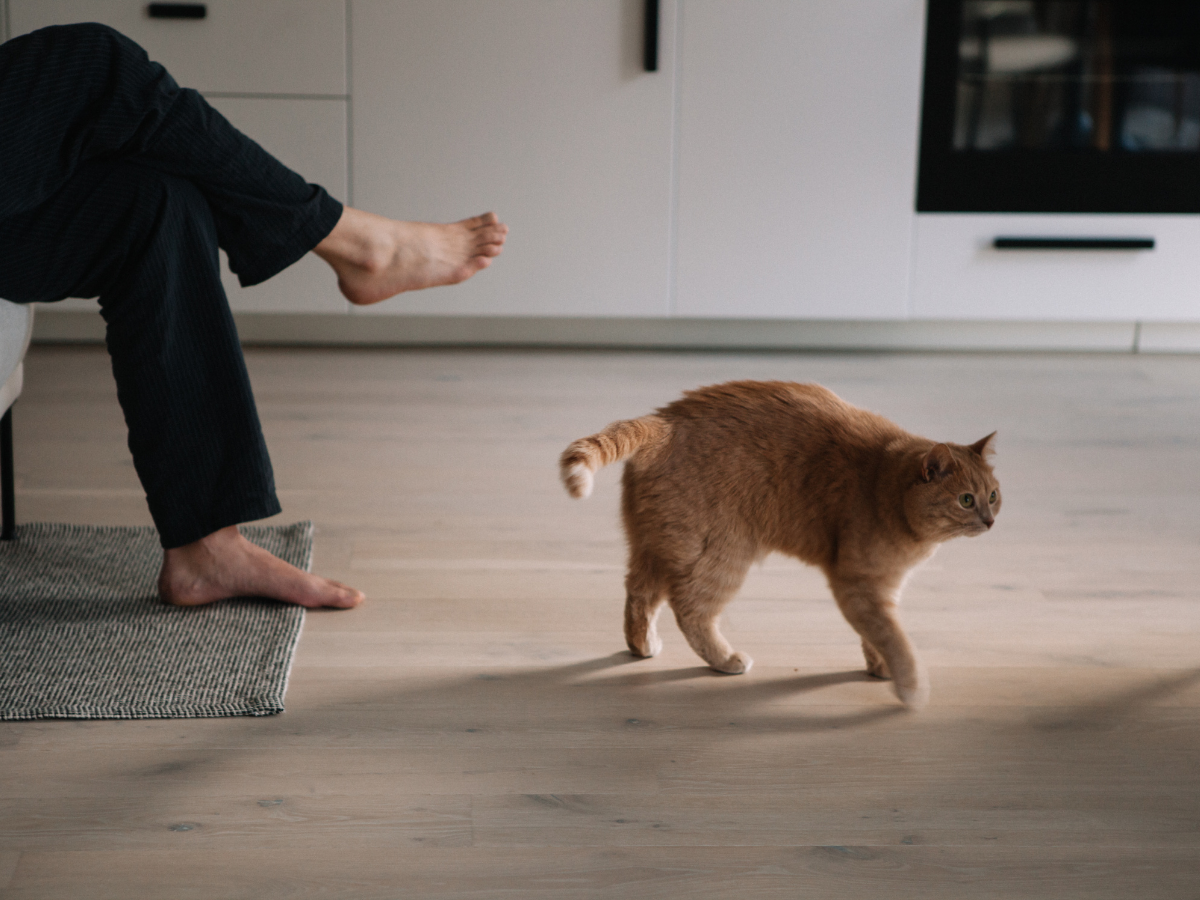
For homeowners who like the appearance of wood but want a surface that can better tolerate everyday wear, laminate can be worth considering. Diaz Hardwood Floors offers laminate flooring in a range of wood-look styles and finishes, along with installation services.
For a home with pets, however, choosing laminate should involve more than selecting a color or deciding whether the floor looks realistic. The specific product still needs to match the household’s priorities for scratches, moisture, traction, maintenance, and room use.
Compare Durability at the Product Level
Laminate is built with a protective surface layer that can provide strong resistance to scratches, impacts, and everyday wear. That can make it practical in homes where pets frequently run through hallways, living rooms, or other high-use spaces.
Not every laminate product will perform identically. Pet owners should compare the durability rating, finish, surface texture, warranty, and manufacturer recommendations for each option rather than assuming every laminate floor provides the same level of protection.
This is particularly important with larger or more active dogs, since repeated claw contact and outdoor grit can put more stress on a floor than ordinary residential foot traffic.
Ask Specifically About Moisture Performance
Scratch resistance and water resistance are separate considerations. A laminate floor may perform very well against claws while requiring more caution around pet accidents, spilled water bowls, or wet paws.
If moisture protection is a priority, ask which available products are rated for that type of exposure and what the manufacturer’s warranty actually covers. Terms such as “water-resistant” and “waterproof” should not be treated as interchangeable.
For households with puppies, pets that frequently have accidents, or rooms where standing moisture is likely, comparing laminate with vinyl or another more moisture-tolerant material may be worthwhile before making a final decision.
Look at Surface Texture and Finish With Pets in Mind
The appearance of laminate can influence how practical it feels after installation. A smooth, glossy surface may make paw prints and minor scratching more noticeable.
It can also provide less traction for some pets. Matte, embossed, distressed, or textured finishes may disguise everyday wear while offering a different feel underfoot. Homeowners can therefore evaluate samples for more than color.
Look at them from different angles, touch the surface, and consider how easily scratches, hair, dust, and paw marks are likely to show. If an older dog or a pet with limited mobility lives in the home, traction should carry more weight in the decision.
Make Installation Part of the Durability Decision
The product itself is only part of how well a floor performs. Diaz Hardwood Floors also provides laminate flooring installation, including subfloor preparation, underlayment, plank fitting, trim work, and cleanup.
Those installation details matter in a pet-friendly home. An uneven subfloor can create movement, poorly fitted joints can become vulnerable areas, and incorrect expansion spacing can affect how a floating laminate floor performs over time.
Before installation, homeowners should understand:
- Whether existing flooring needs to be removed
- Whether the subfloor requires repair or leveling
- What underlayment the chosen product requires
- Whether moisture testing or a moisture barrier is necessary
- How expansion gaps and transitions will be handled
- What care restrictions apply immediately after installation
A clear installation plan helps protect the flooring investment regardless of whether pets live in the home.
Compare Laminate With Other Pet-Friendly Flooring Before Committing
Laminate may be the right choice when scratch resistance, wood-look design, and affordability are high priorities. It is not automatically the best pet-friendly flooring for every household.
A home with frequent accidents may benefit more from a flooring material with stronger moisture performance. A senior dog may need greater traction. Someone determined to have genuine wood may prefer engineered hardwood despite the additional care it can require.
That is why the most useful flooring conversation is not simply, “Is laminate good for pets?” A better question is: “Which flooring product best matches what my pets actually do to the floor?”
By comparing laminate samples and specifications against the household’s real patterns of moisture, traffic, scratching, and cleaning, homeowners can choose pet-friendly flooring for practical reasons rather than relying on a broad “pet-proof” label.
Conclusion
Choosing pet-friendly flooring means finding a surface that can handle claws, spills, accidents, and everyday wear without sacrificing the look and comfort of your home.
Scratch-resistant and waterproof flooring options can make maintenance easier while giving pets a durable surface for daily life. The best choice will depend on your pets, household activity, design preferences, and budget, so professional guidance can help you compare materials and find the right fit.
For quality flooring products, expert installation, and trusted craftsmanship, choose Diaz Hardwood Floors. If you’re ready to upgrade your home with durable, pet-friendly flooring, call 404-791-0444 to speak with the team at Diaz Hardwood Floors or request your free quote today.