Furniture takes daily wear from movement, weight, and constant use, and small impacts can quickly turn into visible damage.
Scratches, dents, and scuffs don’t just affect appearance; they can shorten the lifespan of your pieces. Knowing the right furniture protection tips to help avoid scratches and dents like these can keep your home looking well cared for without constant repairs.
Common causes like dragging chairs, heavy items, pet activity, and unprotected surfaces can all leave lasting marks. The key is preventing damage before it happens with simple, practical adjustments.
With the right habits and protective measures in place, you can preserve the condition of your furniture, reduce maintenance, and keep your spaces looking polished over time.
Furniture Protection Tips That Keep Floors Looking New
What Are The Common Causes Of Scratches And Dents On Hardwood And Laminate Floors?
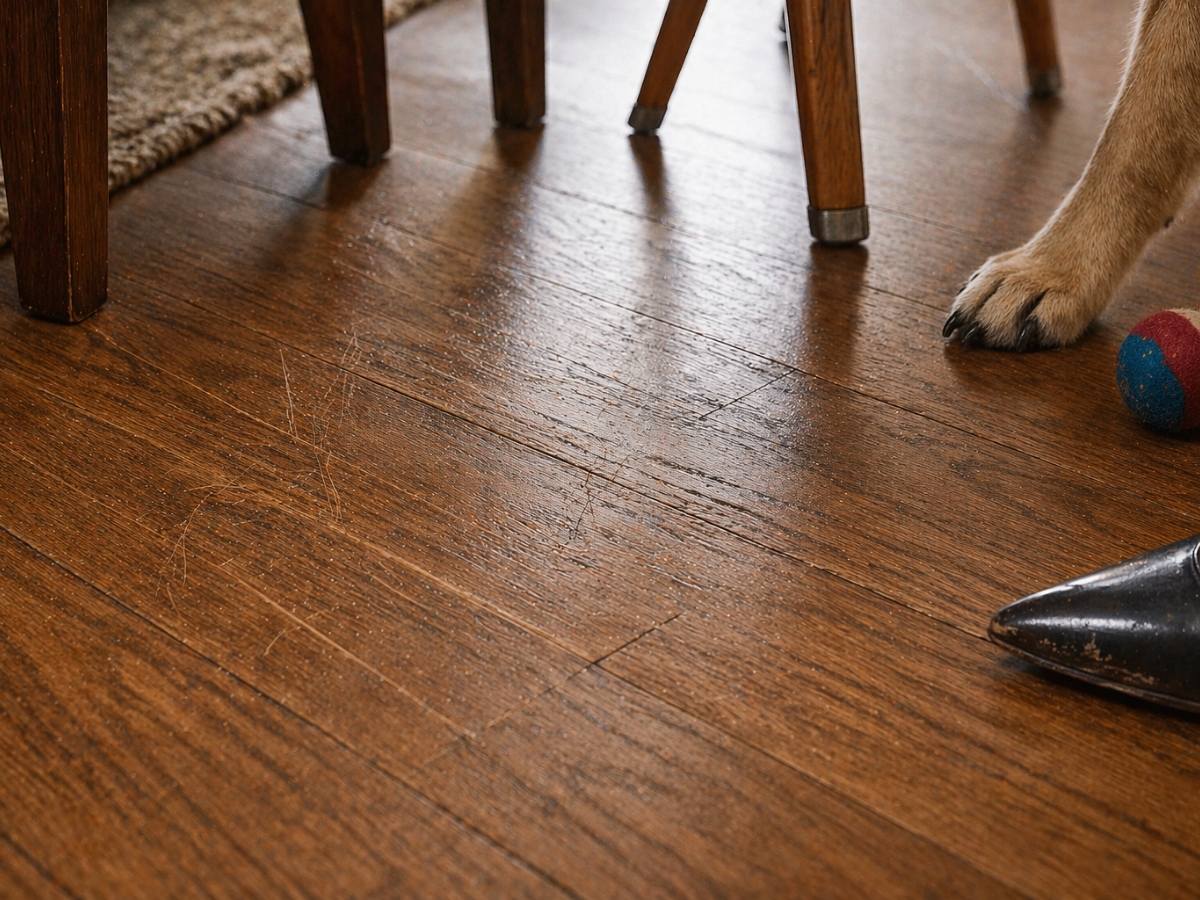
Scratches and dents on hardwood and laminate floors usually develop over time rather than from a single incident. Everyday use, shifting furniture, and small environmental factors all play a role. Understanding where this damage comes from makes it easier to prevent it before it becomes noticeable.
Being aware of how your space is used allows you to protect the materials you have chosen. Floors are one of the most used surfaces in any home, so even small habits can have a lasting impact.
How Does Furniture Movement Contribute To Floor Damage?
Furniture movement is one of the most common reasons floors start to show wear. Even when furniture is not moved often, the way it is handled matters. Dragging heavier items across the floor can leave scratches, while repeated pressure in one spot can lead to dents.
The material of the furniture legs also plays a part. Hard plastic or metal edges can wear down protective finishes more quickly than softer materials. Over time, this creates visible marks that are difficult to ignore.
A simple adjustment in how furniture is moved can make a difference. Lifting items instead of dragging them reduces friction, and adding protective pads helps distribute weight more evenly. These small changes can extend the life of your flooring without requiring major effort.
It is also worth paying attention to frequently used pieces like dining chairs. These tend to shift often and can create consistent wear in the same areas. Protecting these contact points early helps prevent long-term damage.
How Do Daily Activities Increase The Risk Of Scratches And Dents?
Daily routines are another major factor. Foot traffic alone can gradually wear down flooring, especially in areas like entryways, hallways, and kitchens. Shoes with hard soles or small debris stuck underneath can create fine scratches that build up over time.
Pets can also contribute to surface damage. Nails can leave light marks, particularly on softer finishes, and repeated movement in the same areas can make those marks more noticeable. While this type of wear is common, it can often be reduced with simple adjustments.
Cleaning habits matter as well. Using rough materials or harsh chemicals can wear down protective coatings, making floors more vulnerable to damage. A gentler approach to cleaning helps preserve the surface and maintain its appearance.
Which Furniture Protection Methods Best Prevent Floor Scratches And Dents?
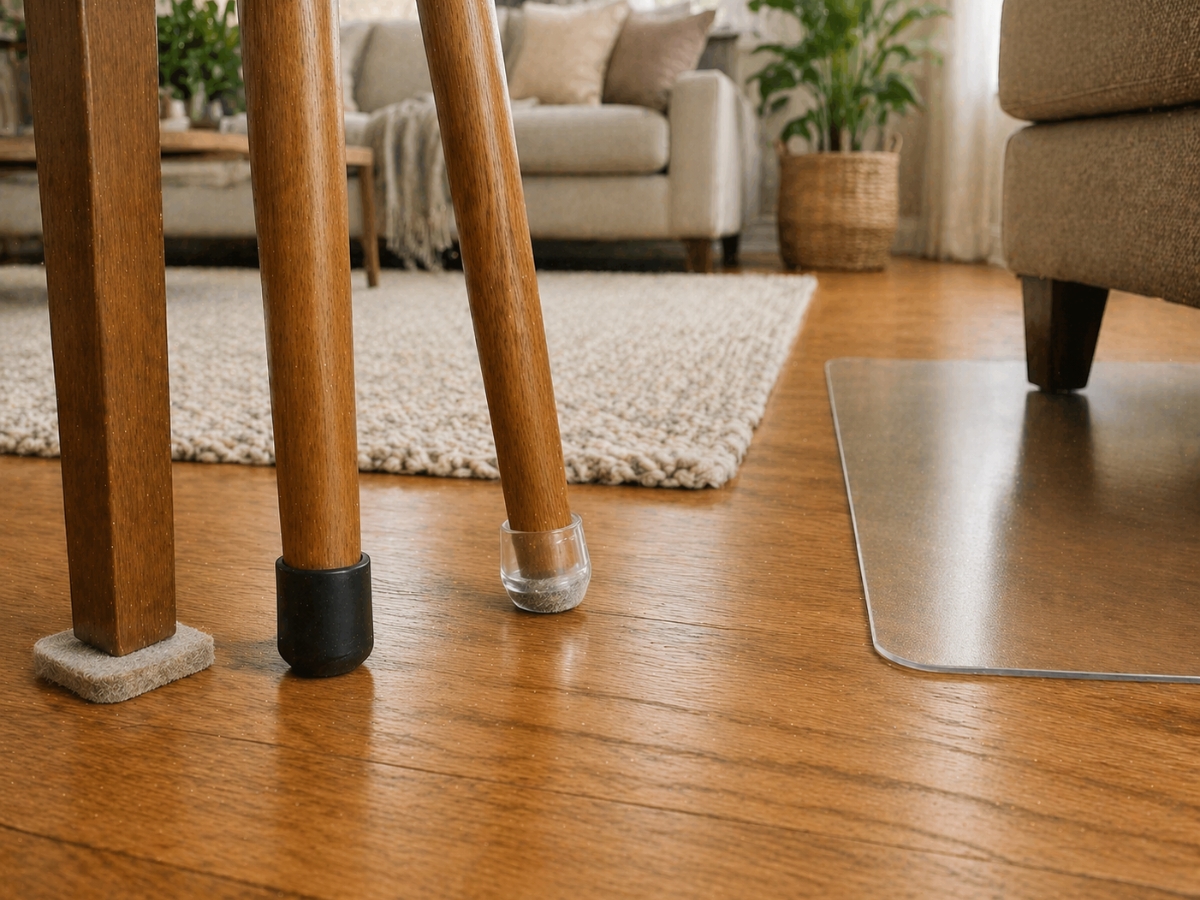
Protecting your floors from everyday wear does not require major changes, but it does take a more intentional approach to how furniture interacts with the surface. Hardwood and laminate floors are durable, but they are not immune to scratches and dents caused by regular use.
Having a clear plan for protecting your floors helps maintain the look of your space over time. Small adjustments can go a long way in preserving both the function and appearance of your flooring.
How Do Furniture Pads Protect Hardwood And Laminate Floors?
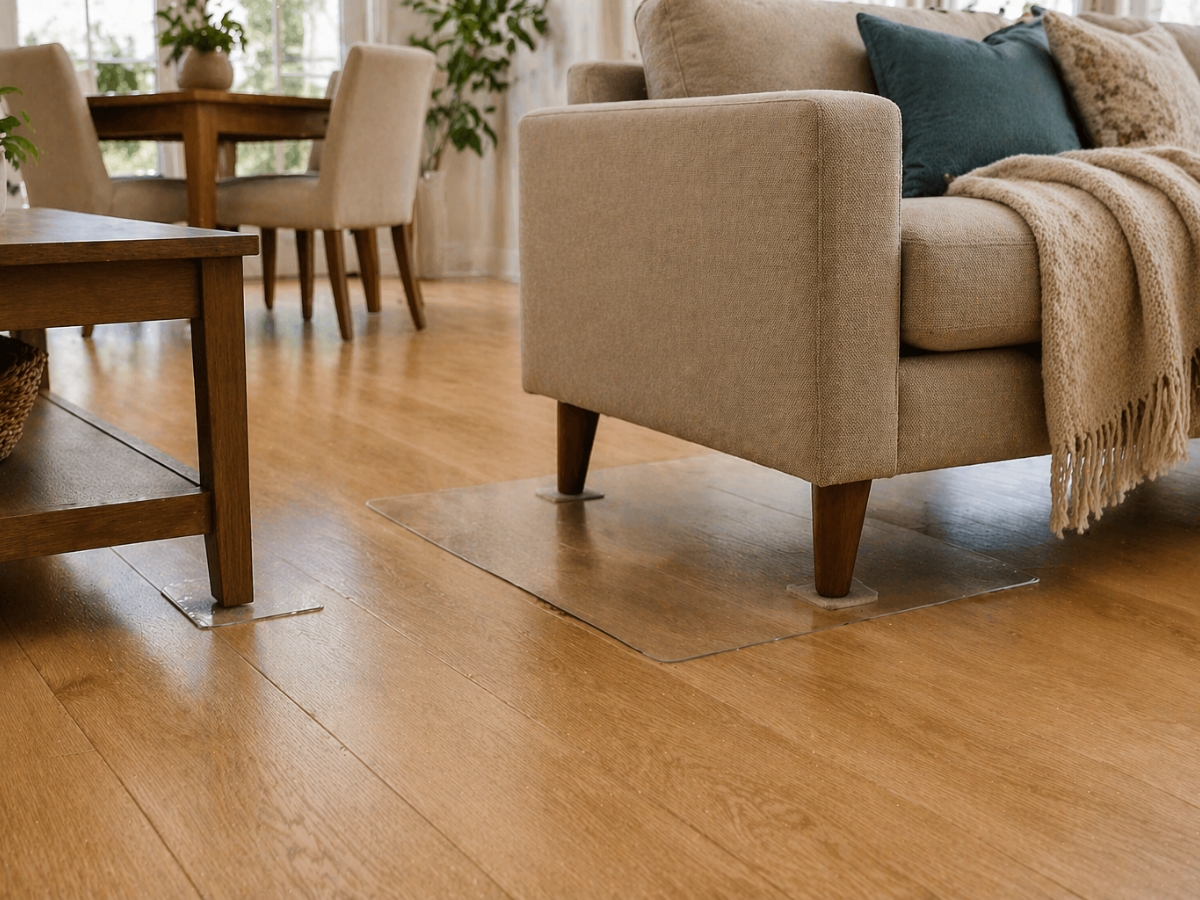
Furniture pads are one of the simplest and most effective ways to prevent damage. These pads sit between the furniture leg and the floor, reducing direct contact and limiting friction when items are moved.
Without this buffer, even slight shifts in furniture can leave marks. Over time, those marks can build up and become more noticeable, especially in high-traffic areas. Pads help absorb some of the pressure while also allowing furniture to move more smoothly when needed.
Choosing the right type of pad matters. Felt pads are commonly used for indoor furniture because they glide easily across hard surfaces. Rubber options can provide more grip, which is helpful for items that should stay in place. The key is making sure the pad fits securely and stays attached, since worn or missing pads can lead to uneven pressure and more damage.
It is also helpful to check these pads periodically. They can wear down or collect debris, which reduces their effectiveness. Replacing them when needed keeps the protection consistent and avoids unnecessary wear on your floors.
What Are The Benefits Of Using Scratch Resistant Coatings?
In addition to physical protection, surface treatments can add another layer of defense. Scratch-resistant coatings are designed to strengthen the finish of hardwood and laminate floors, making them more resistant to daily use.
These coatings work by creating a harder outer layer that can better withstand minor impacts and friction. While they do not make floors completely damage-proof, they can significantly reduce the visibility and frequency of surface marks.
Over time, this can help maintain a more consistent appearance, especially in areas that see regular activity. It also reduces the need for frequent touch-ups or refinishing, which can save both time and cost in the long run.
Many modern coatings are also designed with indoor air quality in mind. Lower emission options are widely available, making it possible to protect your floors without introducing strong odors or harsh chemicals into your space.
How To Combine Protection Methods For Better Results
Using one method alone can help, but combining strategies often produces better results. Furniture pads reduce immediate friction, while coatings strengthen the surface itself. Together, they create a more durable system that holds up well under daily use.
It is also important to consider how your space is used. Areas with frequent movement, such as dining spaces or living rooms, benefit the most from added protection. Being consistent with these methods helps prevent uneven wear and keeps your floors looking balanced.
Why Preventative Care Supports Long-Term Design
Flooring plays a major role in the overall look of a home, so keeping it in good condition supports the rest of your design choices. Maintaining your floors ensures that your vision stays intact over time.
By using simple protection methods and staying consistent with upkeep, you can reduce visible damage and extend the life of your flooring. The result is a space that continues to look intentional, well-maintained, and aligned with your original design goals.
What Are The Best Floor Protection Products For Preventing Scratches And Dents?
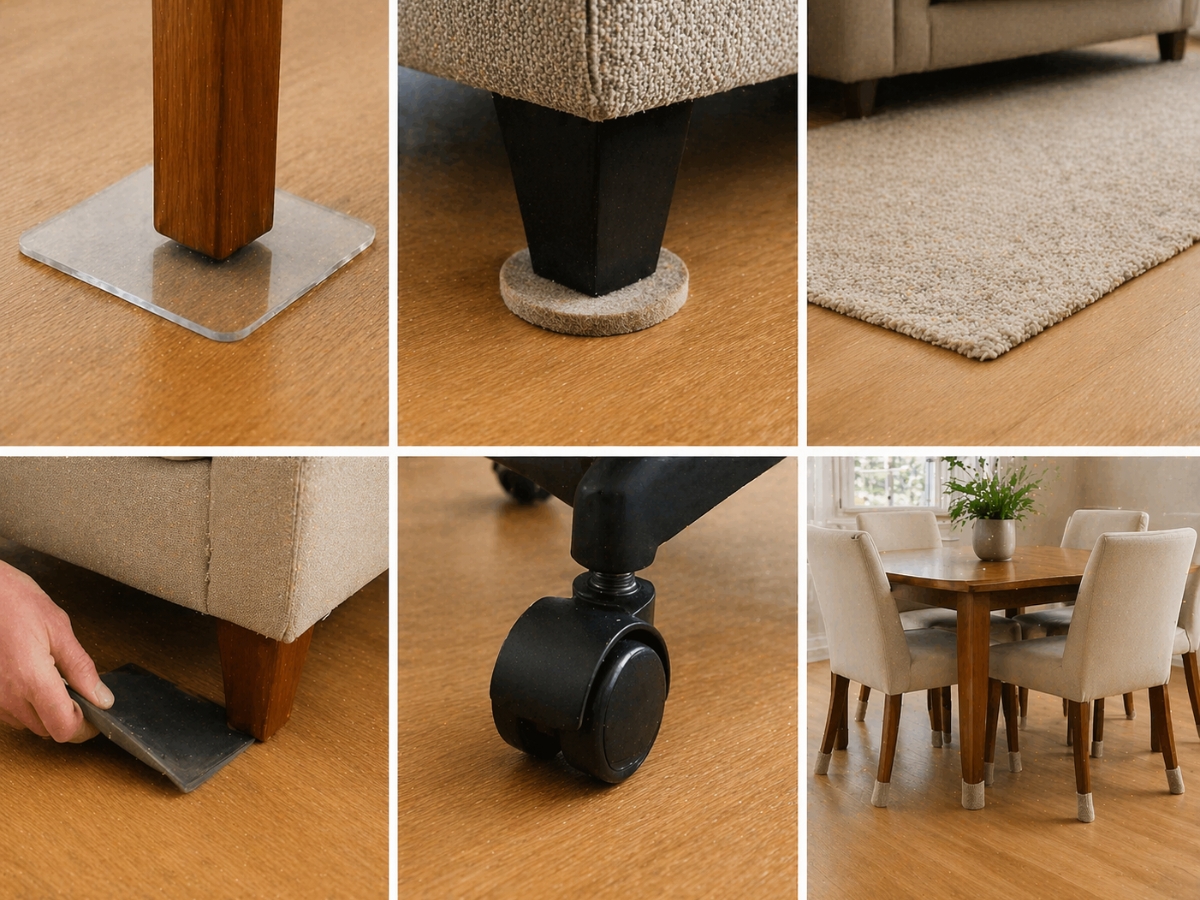
Choosing the right products is one of the most practical ways to protect hardwood and laminate floors from everyday wear.
Damage rarely happens all at once. It builds gradually through daily use, shifting furniture, and repeated foot traffic. Using the right furniture protection tools helps reduce that wear before it becomes noticeable.
Instead of relying on a single solution, it is more effective to use a combination of products based on how each space is used. A dining area will have different needs than a hallway or living room, so matching the product to the environment is key.
Choosing The Right Pads Based On Furniture Type
Furniture pads are one of the most common forms of furniture protection, but the type you choose should depend on how the furniture is used. Pieces that move often need a different solution than items that stay in place.
Felt pads are a reliable option for chairs and stools because they allow smooth movement without scratching the surface. For heavier items like sofas or cabinets, thicker pads tend to last longer and distribute weight more evenly.
Rubber-based pads are better suited for furniture that should not shift. They provide grip while still protecting the floor underneath. Choosing the right pad for each piece helps prevent uneven wear and reduces the chance of dents forming over time.
Expanding Protection Beyond Basic Pads
While pads handle direct contact points, they are only one part of a complete furniture protection strategy. Other products can help reduce damage in areas where wear is more consistent.
Chair glides are useful for spaces where furniture moves frequently, allowing smoother motion across the floor. Rugs and runners help protect high-traffic zones by absorbing impact from daily use. Heavier items, such as appliances, can benefit from specialized protectors that reduce pressure on a single spot.
Using a mix of these options helps address different types of wear rather than relying on one solution to do everything.
Strengthening Floors With Surface Protection
In addition to protecting against contact, it also helps to strengthen the surface itself. Protective coatings add a layer that makes floors more resistant to scratches and minor dents.
These coatings work by absorbing some of the friction caused by movement and foot traffic. Over time, this can reduce visible wear and help maintain a more even finish. While coatings do not eliminate damage entirely, they can extend the life of the flooring and make maintenance more manageable.
Many options are designed for straightforward application, which makes them a practical addition to regular upkeep rather than a complicated project.
Matching Products To How Each Room Is Used
The most effective furniture protection plan comes down to understanding how each room functions. High traffic areas benefit from added coverage, while rooms with heavier furniture need more durable support at contact points.
Taking the time to match products to real usage patterns helps prevent unnecessary damage. It also keeps the flooring looking consistent across different areas of the home.
By combining the right tools and maintaining them regularly, furniture protection becomes a simple but effective way to preserve both the appearance and durability of your floors.
How To Maintain And Repair Hardwood Floors To Prevent And Fix Scratches And Dents
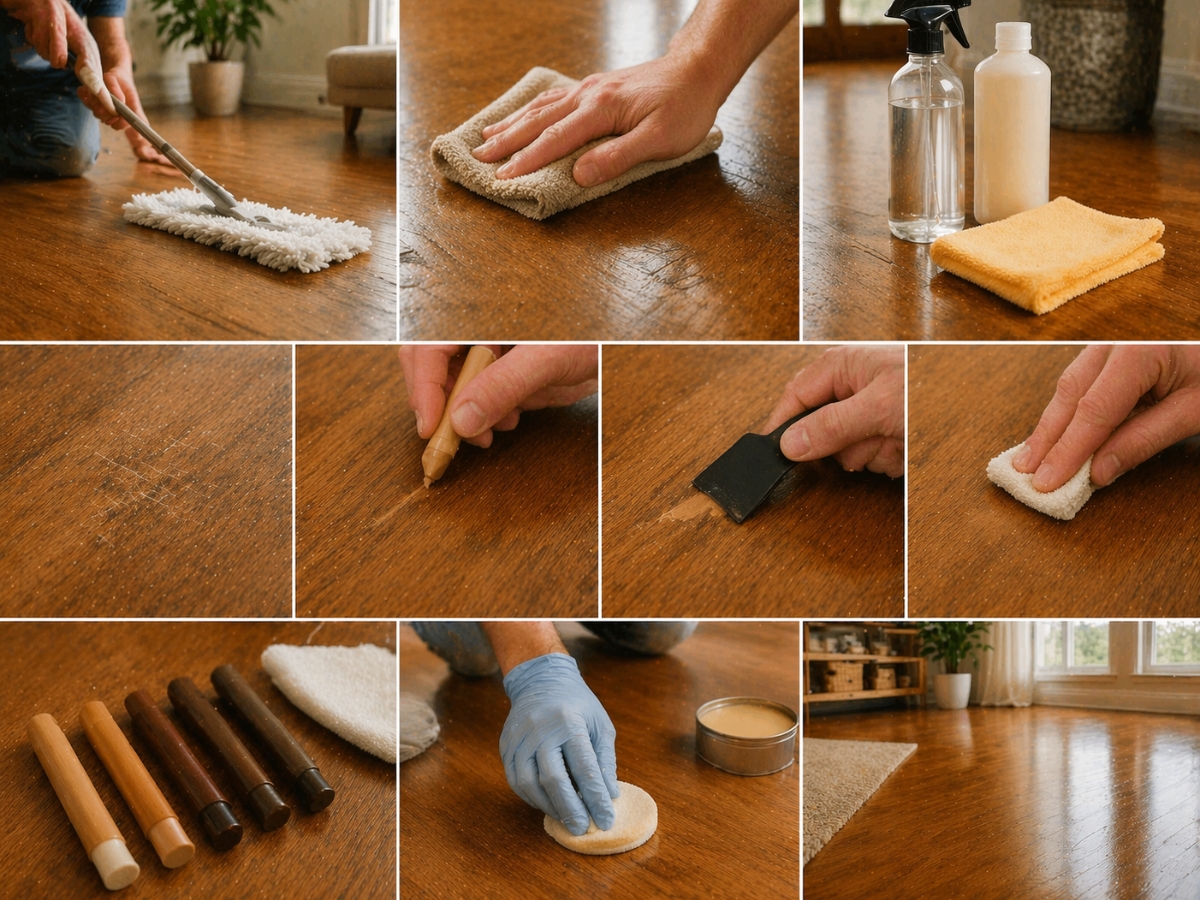
Keeping hardwood floors in good condition requires a balance of regular care and knowing how to address small issues before they worsen.
Scratches and dents are often unavoidable over time, but with the right approach, they can be minimized or corrected without major work.
A consistent routine not only preserves the appearance of the floor but also supports any furniture protection measures already in place. When both maintenance and furniture protection are working together, floors tend to hold up much better under daily use.
Building A Simple Maintenance Routine That Works
A reliable maintenance routine does not need to be complicated, but it does need to be consistent. Dust, dirt, and small debris are some of the most common causes of surface scratches, especially in high-traffic areas. Removing these regularly helps prevent that gradual wear.
Using a soft broom or a vacuum designed for hardwood floors is usually enough to keep the surface clear. Gentle cleaning solutions can also help maintain the finish without stripping away protective layers. Harsh chemicals or abrasive tools tend to do more harm than good, so it is better to keep cleaning methods simple.
Moisture control is another important factor. Wood naturally reacts to changes in humidity, which can lead to expansion, contraction, or even small cracks over time. Keeping indoor humidity at a stable level helps maintain the integrity of the flooring and reduces the risk of long-term damage.
How Maintenance Supports Furniture Protection
Maintenance and furniture protection are closely connected, even though they are often treated separately. A clean, well-maintained floor is less likely to develop scratches when furniture is moved or adjusted.
When debris is left on the surface, even protective pads can trap particles underneath, which can create fine scratches during movement. Keeping floors clean allows furniture protection products to work as intended, rather than contributing to the problem.
This combination approach helps reduce both surface-level wear and more serious damage, making it easier to maintain a consistent appearance throughout the home.
Practical Ways To Repair Minor Scratches
Even with proper care, small scratches can still appear. The key is addressing them early while they are still easy to manage. Shallow scratches can often be improved using color-matched solutions such as wax sticks or wood fillers.
These products help blend the damaged area with the surrounding surface, making the scratch less noticeable. The goal is not always to make the floor look brand new, but to restore a more uniform appearance.
Applying these fixes carefully and in small amounts usually produces better results than trying to overcorrect the area. Taking a gradual approach allows you to match the existing finish more closely.
How To Handle Dents Without Major Repairs
Dents can be more noticeable than scratches, especially in softer wood surfaces. In some cases, light dents can be improved using a simple method that involves moisture and heat. Placing a damp cloth over the dent and applying gentle heat can help the wood expand slightly, reducing the depth of the mark.
This method does not work for every type of damage, but it can be effective for minor dents that have not broken the surface. For more severe issues, refinishing or professional repair may be required to restore the floor properly.
When To Consider More Extensive Repairs
There comes a point where small fixes are no longer enough, particularly if damage is widespread or affects deeper layers of the wood. In these situations, sanding and refinishing may be the most effective way to restore the surface.
While this is a more involved process, it can bring older floors back to a more consistent condition. Pairing this with improved maintenance and furniture protection strategies afterward helps prevent the same issues from returning.
By staying consistent with care and addressing minor damage early, it becomes much easier to maintain the overall look and durability of hardwood floors over time.
How Professional Guidance Supports Long-Term Floor Protection
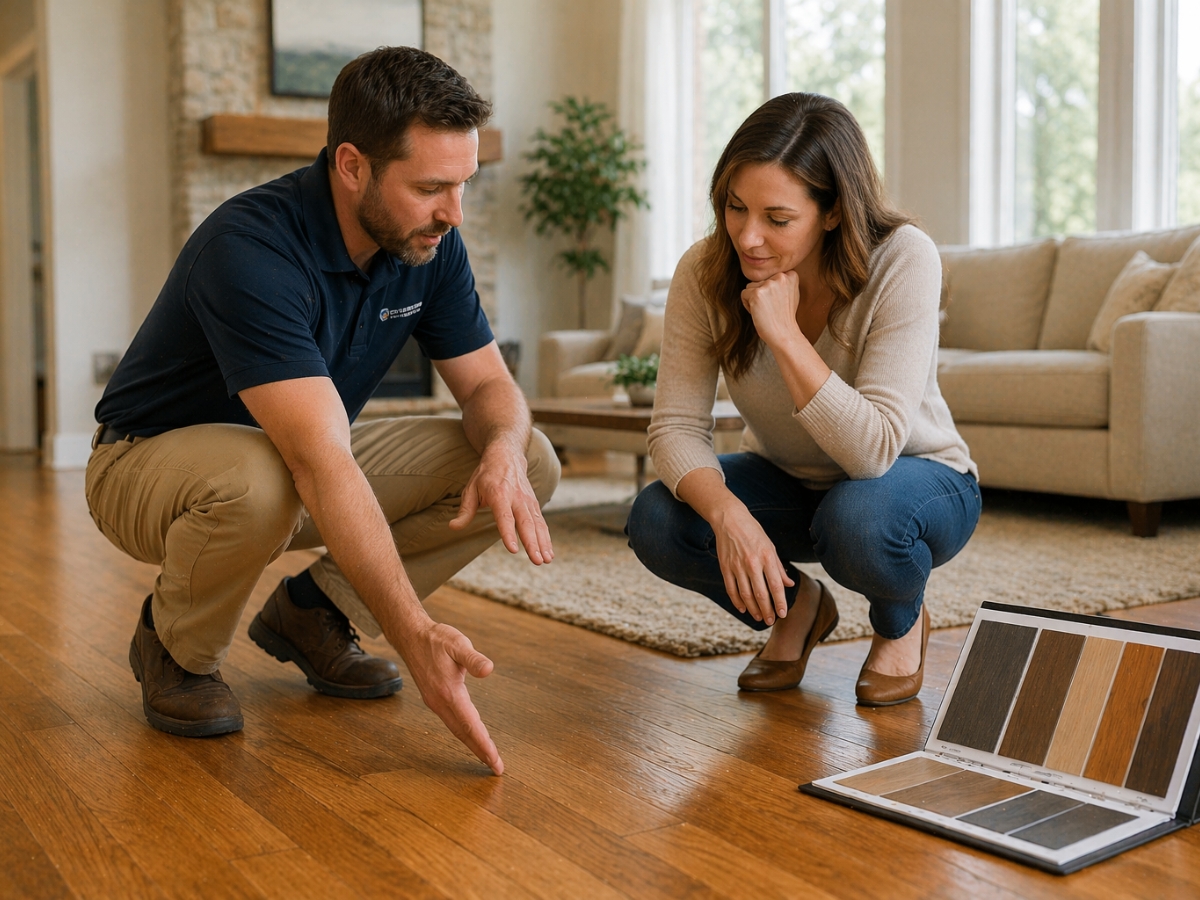
While everyday habits play a big role in maintaining your floors, there are situations where professional insight can make a noticeable difference.
Flooring specialists bring a level of experience that goes beyond basic upkeep, helping homeowners understand how to protect their investment over time.
This is especially useful when dealing with high-traffic areas, older flooring, or surfaces that are already showing signs of wear.
Instead of relying on trial and error, professional consultation can provide a clearer path forward, particularly when it comes to choosing the right furniture protection strategies and surface treatments.
What To Expect From A Floor Protection Consultation
A professional consultation typically starts with an evaluation of your current flooring condition. This includes looking at existing scratches, wear patterns, and how the space is being used on a daily basis.
These details help determine what type of furniture protection and maintenance approach will be most effective moving forward.
Companies like Diaz Hardwood Floors often focus on practical recommendations rather than one-size-fits-all solutions. This might include suggestions on better placement of furniture, identifying areas that need additional protection, or recommending finishes that are more resistant to daily wear.
The benefit of this type of guidance is that it is tailored to your specific environment. A home with pets, for example, will have very different needs compared to a space that sees minimal foot traffic. Professional input helps bridge that gap by aligning your maintenance habits with how your space is actually used.
How Expert Advice Improves Decision-Making
One of the most overlooked benefits of professional consultation is how it simplifies decision-making. With so many products and approaches available, it can be difficult to know what actually works and what is unnecessary.
An expert can help narrow those options down based on your flooring type, lifestyle, and long-term goals. This might include identifying which protective coatings are worth applying, when refinishing is a better option than repair, or how to improve your current furniture protection setup without overcomplicating it.
This kind of clarity helps prevent wasted time and money, while also reducing the risk of using products that may not be suitable for your floors.
Why Installation Quality Impacts Floor Durability
The way a floor is installed has a lasting effect on how well it holds up over time. Even high-quality materials can wear down faster if they are not installed correctly. Small issues such as uneven surfaces or improper sealing can make floors more vulnerable to scratches and dents.
Professional installers are trained to account for these details from the beginning. They understand how different materials respond to pressure, movement, and environmental changes, which allows them to reduce weak points during installation.
This foundation plays a key role in how effective furniture protection will be later on. When floors are installed properly, protective measures such as pads or coatings tend to perform better because the surface itself is stable and evenly supported.
Combining Professional Services With Everyday Care
Professional services are most effective when they are paired with consistent daily habits. Even the best installation or consultation will not fully protect a floor if it is not maintained properly afterward.
That said, combining expert guidance with simple practices such as regular cleaning, thoughtful furniture placement, and ongoing furniture protection creates a more complete approach. Each layer supports the other, making it easier to prevent damage rather than constantly repairing it.
Over time, this balanced strategy helps maintain both the appearance and durability of your floors, without requiring constant intervention or major repairs.
How Eco-Friendly Innovations Are Changing Floor Protection
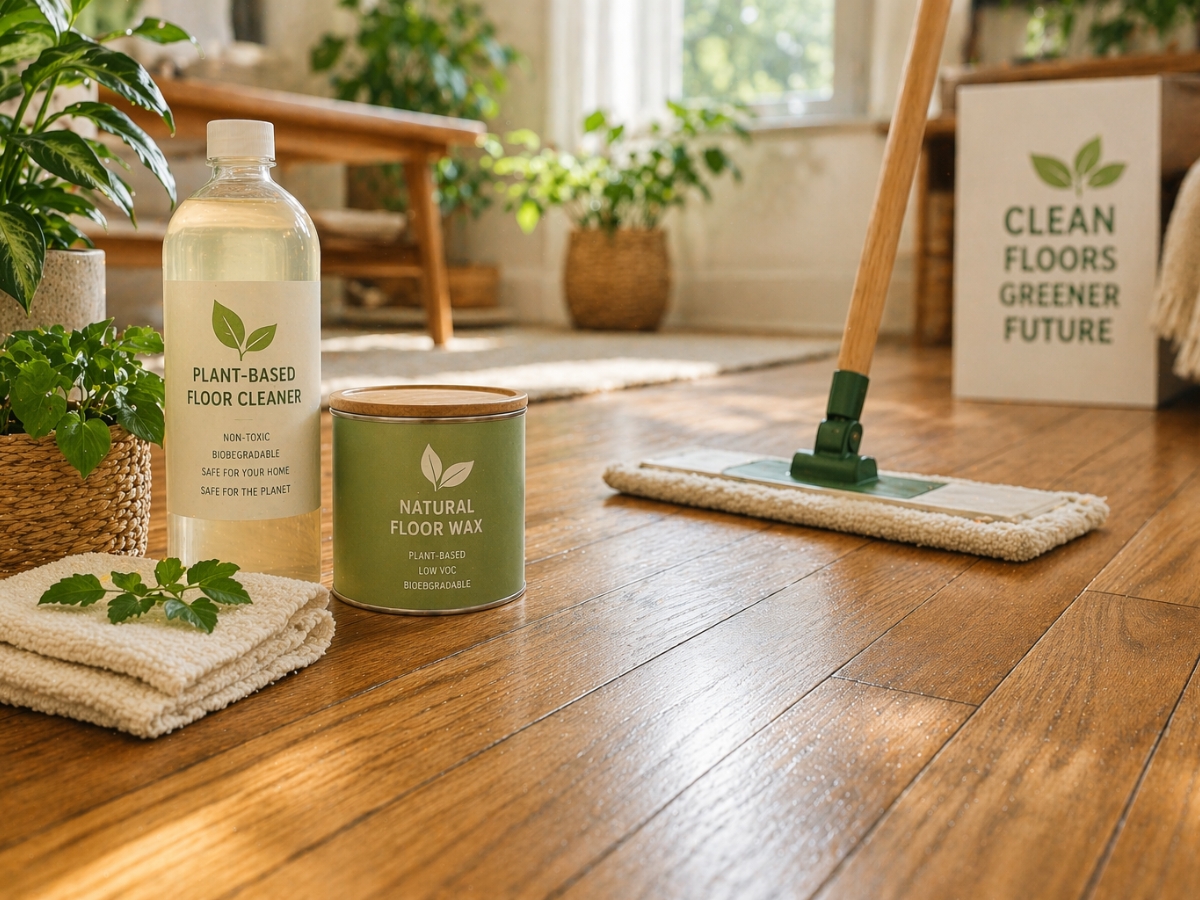
Sustainability is starting to shape how homeowners think about long-term maintenance, and that includes how they approach furniture protection.
Instead of relying on traditional materials that may wear out quickly or contain harsh chemicals, many are turning to alternatives that balance performance with environmental responsibility.
Eco-friendly floor protection solutions are designed to reduce waste, limit indoor pollutants, and still provide reliable defense against scratches and dents.
This shift is not just about being environmentally conscious. It also reflects a growing interest in safer, longer-lasting materials that work well in everyday living spaces.
What Sustainable Materials Offer In Everyday Use
Modern furniture protection products now include options made from recycled fibers, natural rubber, and plant-based compounds. These materials are often just as effective as their conventional counterparts, but they come with fewer environmental drawbacks.
For example, furniture pads made from recycled felt or cork can provide a durable buffer between furniture legs and flooring. They reduce friction during movement while also holding up well over time.
In addition, low-VOC coatings are becoming more common for hardwood floors. These finishes help protect surfaces without releasing strong chemical odors into the home.
Choosing these types of materials can make a noticeable difference, especially in households that prioritize air quality or want to limit exposure to synthetic products.
At the same time, they still support the core goal of furniture protection, which is to prevent everyday wear before it becomes visible damage.
How Smart Technology Supports Preventative Care
Another emerging layer of floor care comes from smart home floor technology. While furniture pads and coatings address direct contact, environmental conditions often play a hidden role in floor damage. Changes in humidity or temperature can cause materials like hardwood to expand, contract, or weaken over time.
Smart sensors can track these conditions and send alerts when levels move outside a safe range. This allows homeowners to respond early, whether that means adjusting indoor humidity or improving ventilation. Over time, this kind of monitoring can help reduce the likelihood of cracks, warping, or surface stress.
When combined with furniture protection strategies, smart technology adds a more proactive element to floor care. Instead of reacting to damage after it happens, homeowners can manage the conditions that contribute to it in the first place.
Why Eco-Friendly Choices Support Long-Term Durability
It might seem like sustainability and durability are separate concerns, but they often work together. Products designed with fewer harsh chemicals and more stable materials tend to age more predictably. This can result in fewer replacements and less maintenance over time.
Eco-friendly furniture protection solutions also encourage a more thoughtful approach to care. Rather than applying quick fixes, homeowners are more likely to choose products that align with how their floors are used on a daily basis. This leads to better results over the long run.
Creating A Balanced Floor Protection Strategy
The most effective approach to protecting your floors often combines multiple layers. Furniture protection remains the first line of defense, especially in high-use areas. Adding eco-friendly materials strengthens that foundation, while smart technology helps monitor conditions that are easy to overlook.
By bringing these elements together, homeowners can create a system that not only protects their floors but also supports a healthier living environment. Over time, this balanced approach reduces the need for repairs and keeps flooring looking consistent without relying on constant upkeep.
Conclusion
Protecting your furniture from scratches, dents, and everyday wear is all about proactive care and thoughtful habits. Simple measures like using felt pads under legs, rotating area rugs, and keeping pet nails trimmed can make a significant difference in preserving the beauty of both your furnishings and your flooring.
When it’s time to refresh or replace your floors with durable, stylish flooring options that stand up to real life, trust the expertise of Diaz Hardwood Floors.
Ready to protect your investment and elevate your home’s beauty? Call 404-791-0444 today or book a consultation through our site form. Let our team help you choose flooring that combines elegance with resilience, and share expert tips to keep it looking its best for years to come.